In Pierre Földes’s ‘Blind Willow, Sleeping Woman,’ Haruki Murakami’s Dream Logic Finds Its Perfect Form
Haruki Murakami is a true auteur of literature—a “literauteur,” if you will. Fans have come to recognize and love his signature motifs: talking animals, mysterious vanishing women, characters adrift in existential malaise. Murakami has a rare knack for making small mundane details feel visceral and alive. The simple act of preparing a pasta dish or putting on a record feel like quiet, but powerful rituals. Staircases, tunnels, and wells become portals into parallel dimensions. The line between reality and fantasy fades, leaving both protagonists and readers wondering, “Did I just dream that?” While several filmmakers have adapted Murakami’s work for the screen, Pierre Földes’s Blind Willow, Sleeping Woman is the first to give the author’s unique vision the animation treatment. The result is, fittingly, dreamy.
Set in Tokyo in the aftermath of the 2011 earthquake and tsunami, the film weaves together multiple storylines drawn from six of Murakami’s short stories from three collections: Blind Willow, Sleeping Woman; After the Quake; and The Elephant Vanishes.
There’s Komura, an employee of Tokyo Security Trust Bank whose wife, Kyoko, has not left the couch since the earthquake, her eyes glued to the TV as if she herself were pinned under the rubble. There’s Komura’s colleague Katagiri, a mild-mannered older man who’s overworked, underappreciated, and quietly simmering beneath the surface. Both men seem to be floating through life, passive and detached from what’s happening around them. Their already vacant lives are all but drained of meaning by the soulless existential vacuum that is their shared work environment, made worse by an overly demanding boss. Both Komura and Katagiri are begging for something as cataclysmic to shake up their lives, to reawaken their own agency.
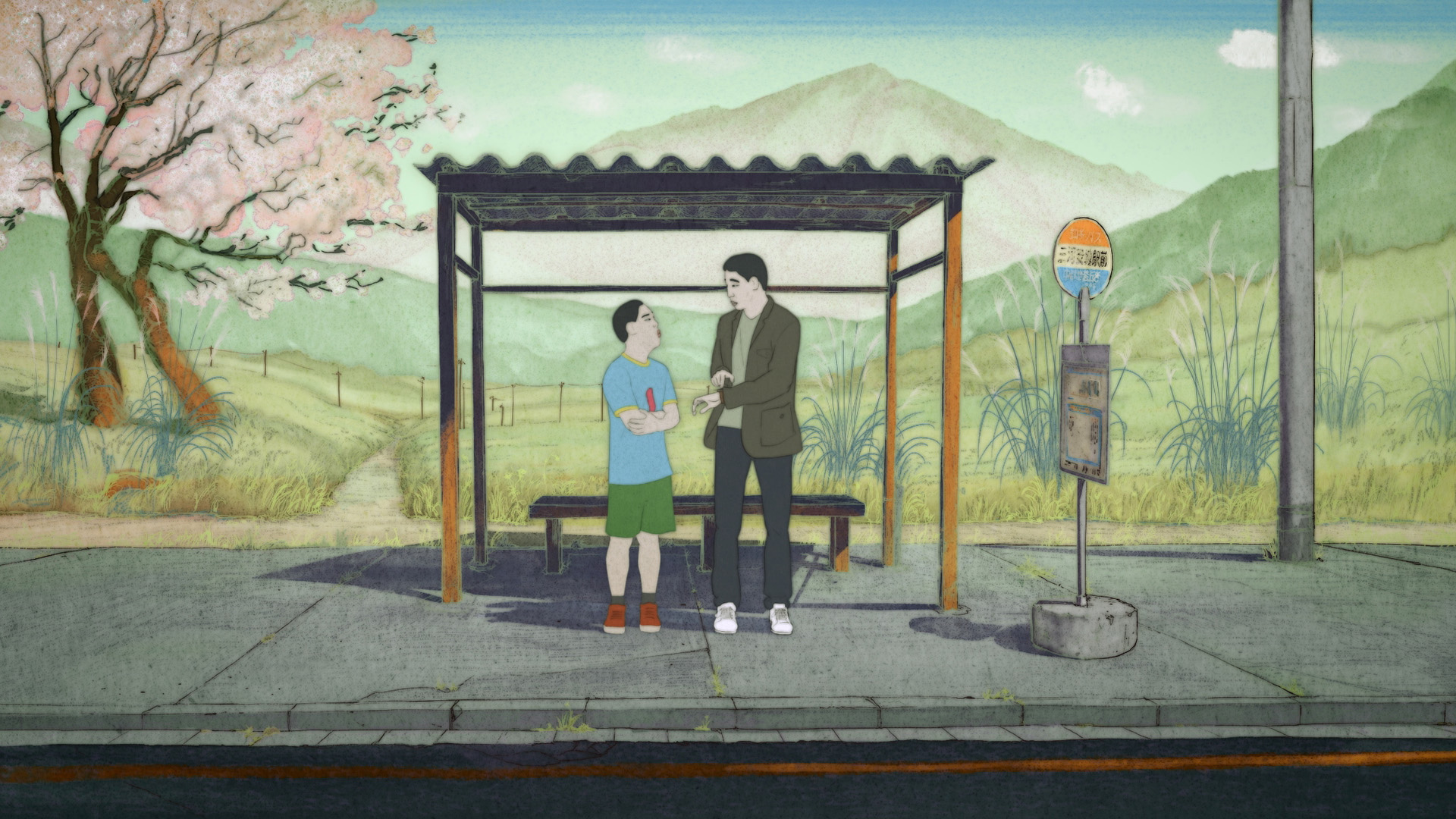
For Komura, that catalyst is Kyoko’s sudden departure. He comes home from work to find a letter revealing that she’s left him. His emptiness had become unbearable; living with him was like living with “a chunk of air.” Kyoko ends her message with a plea to take care of their cat Watanabe, who’s disappeared. Murakami readers will clock this immediately, as missing cats is a recurring motif in his stories, often symbolizing loss and transformation. So when Komura takes a train ride shortly after reading the letter and falls asleep dreaming about a mysterious woman and Watanabe, we know that he’s just gone through a portal and his life will never be the same.
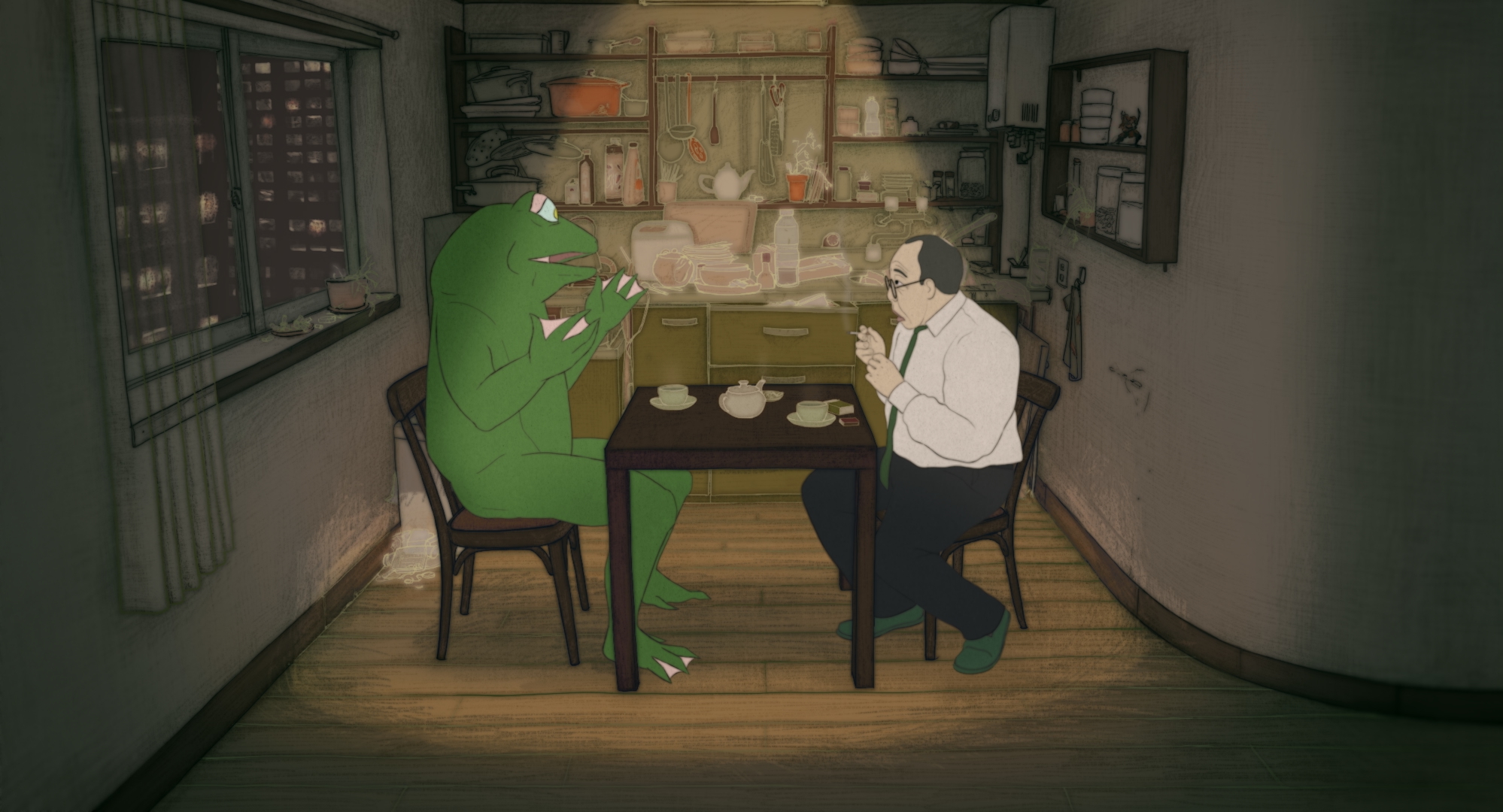
Katagiri’s catalyst is much louder. After another thankless day at work, he comes home to find a giant talking frog waiting for him with a proposition: join him in saving Tokyo from destruction. Quoting Nietzsche and framing Katagiri’s docile, obedient nature as his superpower, Frog enlists the loan officer’s help in fighting the fearsome Worm and preventing him from causing a catastrophic earthquake that will claim countless lives. When Katagiri asks if he is indeed a real frog, the giant amphibian begins croaking loud enough to cause his own tremors. But is Frog real or is he a psychic manifestation of Katagiri’s pent-up anger, resentment, and self-loathing?
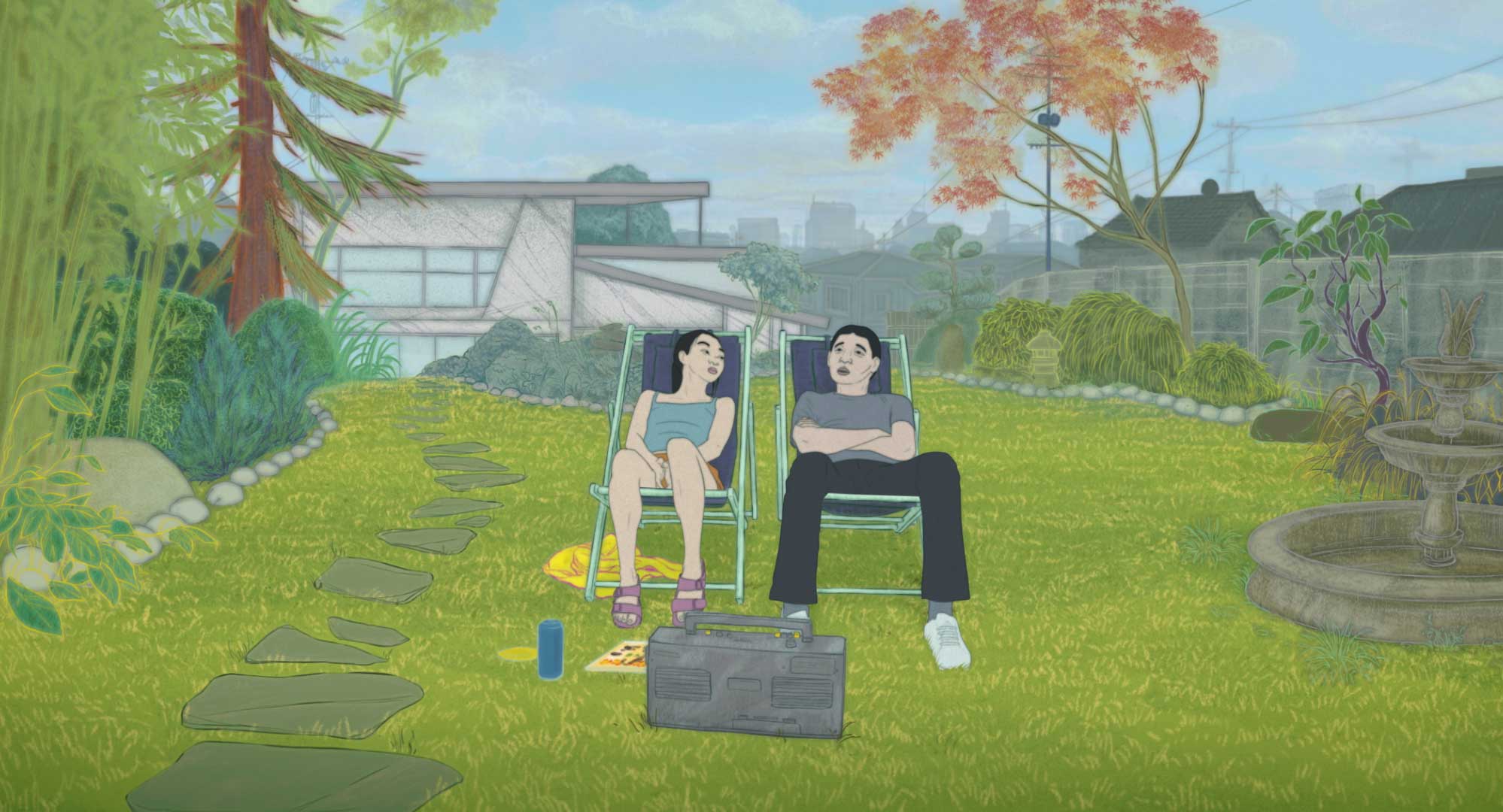
Then there’s Kyoko, who recounts to a man in a bar her strange encounter with an ex-employer on her 20th birthday. While working as a waitress, she delivered dinner to the restaurant’s owner, who offered to grant her one wish. Without revealing what her wish was, the film makes it clear that the fateful night had changed the course of not only her life, but her destiny.
In signature Murakami fashion, these strands barely meet, let alone intertwine, and each individual’s story is left somewhat open-ended, much like a dream. While Murakami’s influence is ingrained in the film, it’s Földes’s interpretation that truly gives Blind Willow, Sleeping Woman its unforgettable singular quality. By filming the entire screenplay to create a live-action reference for the animation, the end result is hypnotically otherworldly yet grounded in uncanny humanness. “As an artist, it was really essential for me to make my own language,” Földes told IndieWire.
Ultimately, Blind Willow, Sleeping Woman is like a marriage of two distinct visions that came together for a trance-like walk through the forest. It’s beautiful and visceral but distant and elusive. There might not be total resolution, but we as viewers are left with something much more resonant: a lingering feeling that critics have described as “aftershocks.” This is a film that you’ll find yourself replaying in your mind, just like a haunting dream.
Stream Blind Willow, Sleeping Woman on Kino Film Collection now.
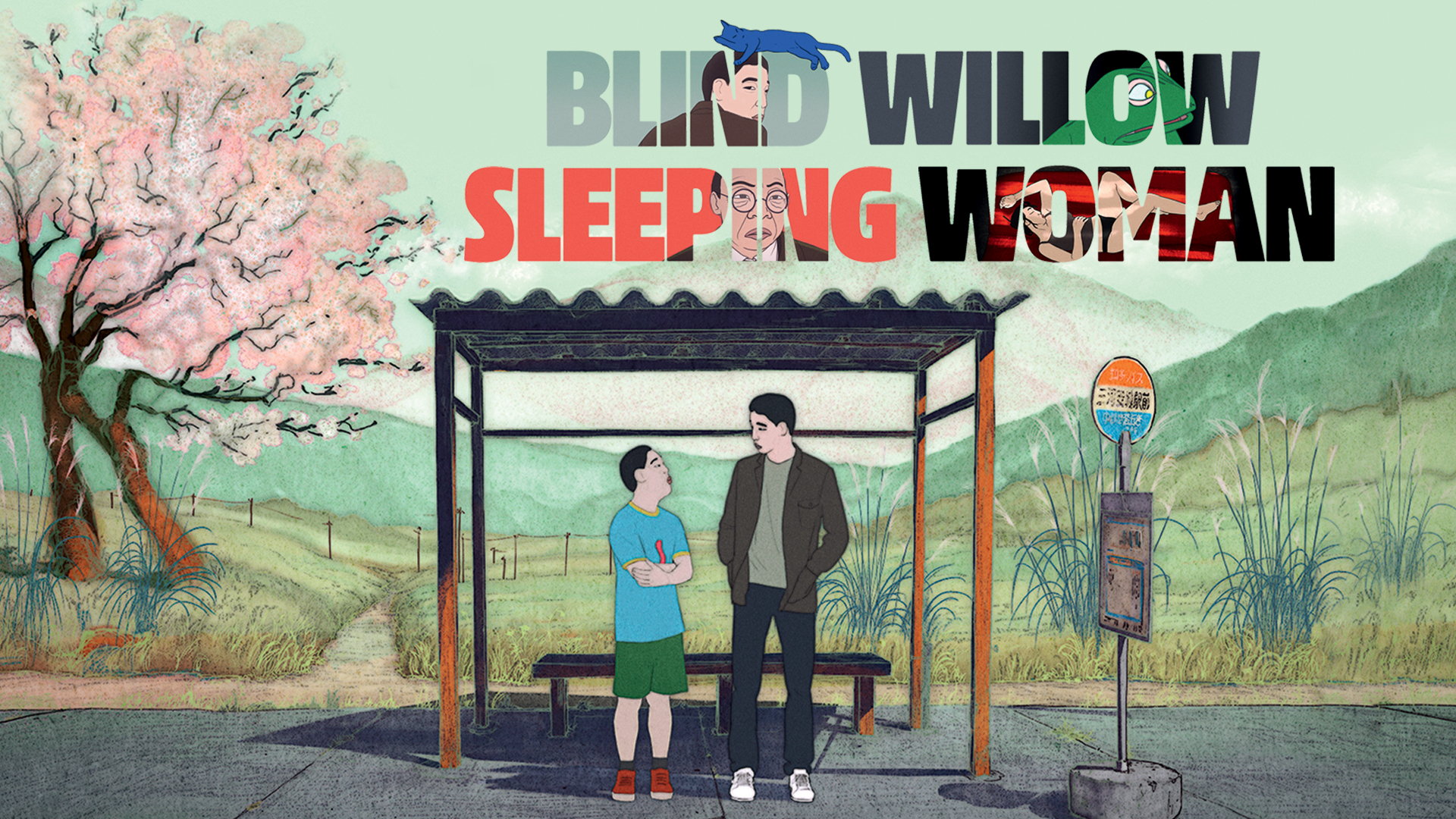
Blind Willow, Sleeping Woman (2022)
A giant talking frog and an elusive cat help a listless bank employee, his traumatized wife, and a lonely accountant seek meaning in their lives and possibly save Tokyo from catastrophe in this animated feature debut by composer Pierre Földes. Based on stories by acclaimed Japanese author Haruki Murakami (Drive My Car).