


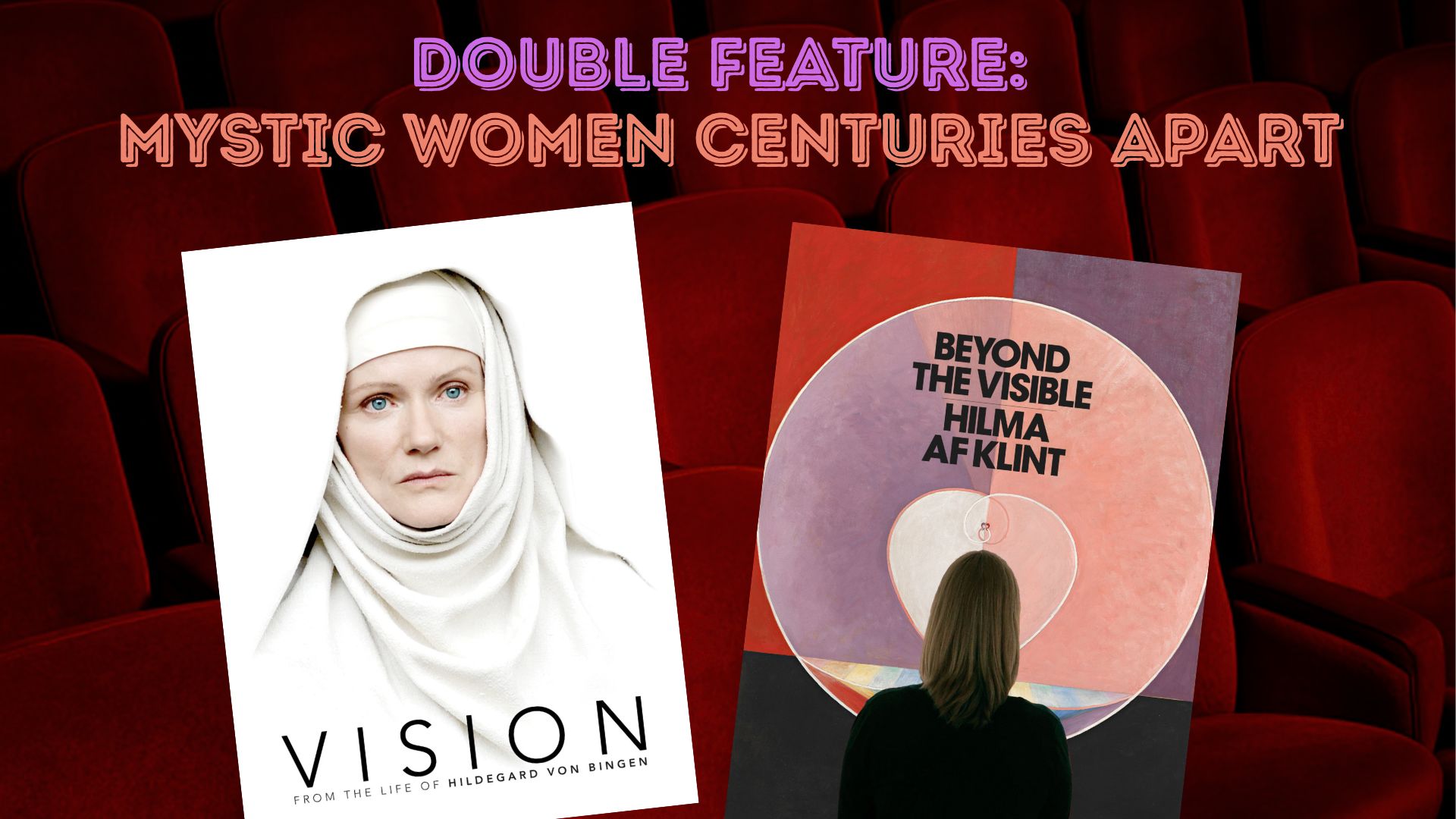
Meet Hildegard von Bingen and Hilma af Klint, Two Mystical Women Ahead of Their Time
There’s vision. And then there’s vision. The kind that’s beyond what’s visible. Though the real-life heroines of this double feature existed centuries apart and would never have crossed paths had they lived in the same era, there is a throughline connecting them that transcends space, time, and the earthly plane. Both Hildegard von Bingen and Hilma af Klint possessed mystical abilities that inspired some of the most extraordinary works in history intersecting art, science, and spirituality. One lived in the 12th century, the other the 19th and 20th. Both were eons ahead of their time.
Margarethe von Trotta’s Vision: From the Life of Hildegard von Bingen traces the Benedictine abbess’s life from childhood to near sainthood, highlighting pivotal moments shaped by her divine visions. From advocating to relocate her nuns to a more autonomous convent to defying the Church by allowing the burial of an ex-communicated man, von Bingen was never afraid to disrupt the male-established status quo. Remarkably, and perhaps going against what most history has taught us, she consistently succeeded in gaining authority and influence because of the power her visions granted her. As the film charts her rise up the ranks of the order, it also establishes von Bingen as an early multi-hyphenate (which is maybe an understatement). Von Bingen was proficient in a wide range of fields, including but not limited to: music, theology, philosophy, ecology, herbology, playwriting, physics, and ecclesial politics.
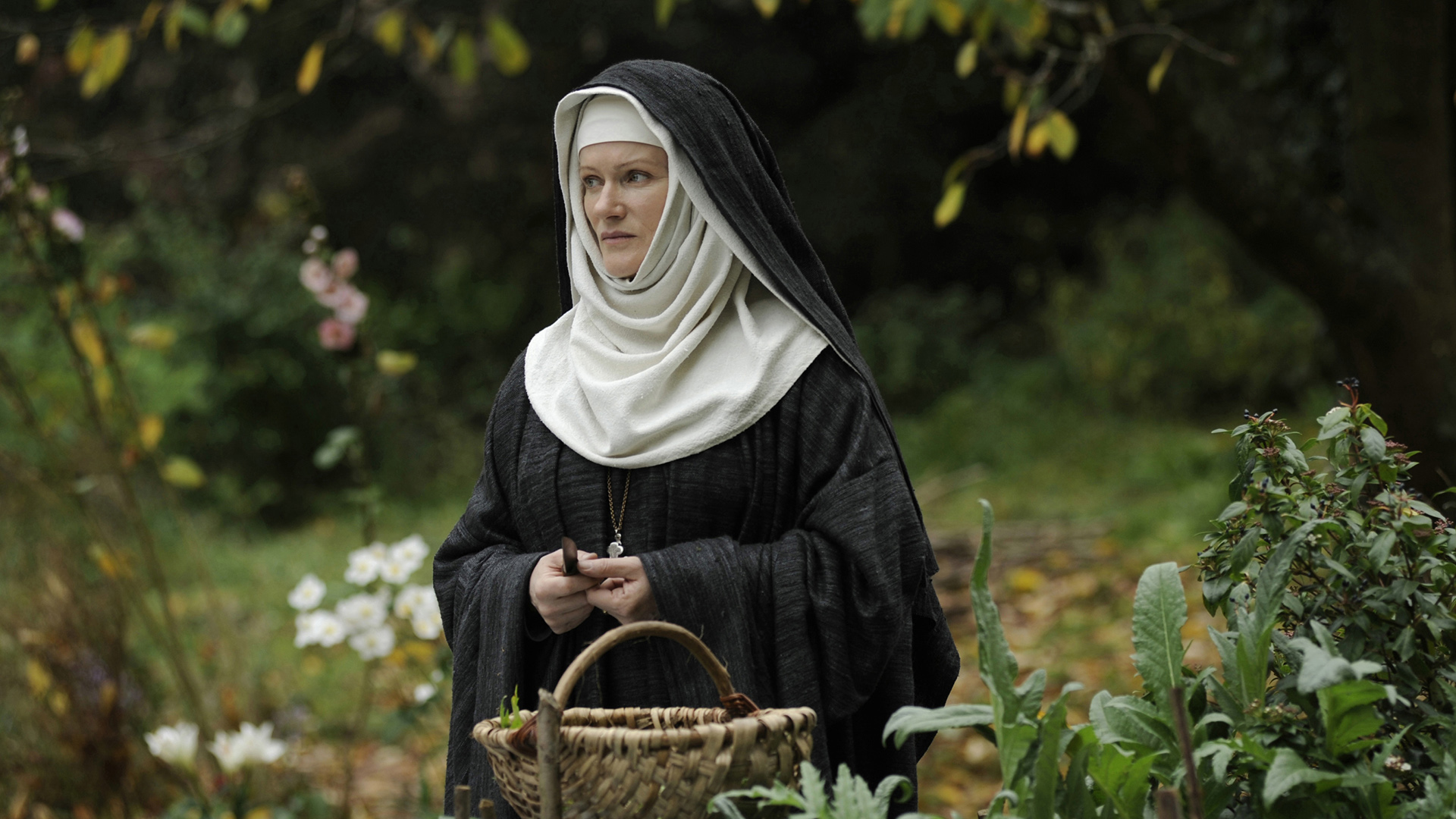
Casting the role of von Bingen could not have been easy, but somehow they found the perfect person for the job: German actress Barbara Sukowa, whose piercing gaze gives the illusion that she herself is some kind of ethereal vision manifested on screen through divine powers. Both von Trotta and Sukowa strike the right balance in telling von Bingen’s story by giving her just enough human dimension to be relatable while leaving her just beyond knowable. Von Trotta has remarked on this duality, describing von Bingen as “a visionary, but at the same time fully grounded,” while Sukowa remained realistic about portraying someone so iconoclastic and otherworldly: “It's not possible to enter the mind of someone who thinks like that.”
Hilma af Klint, on the other hand, did not garner the recognition during her lifetime that von Bingen did, but Halina Dyrschka’s Beyond the Visible — Hilma af Klint posthumously sets the record straight on just how influential she was.
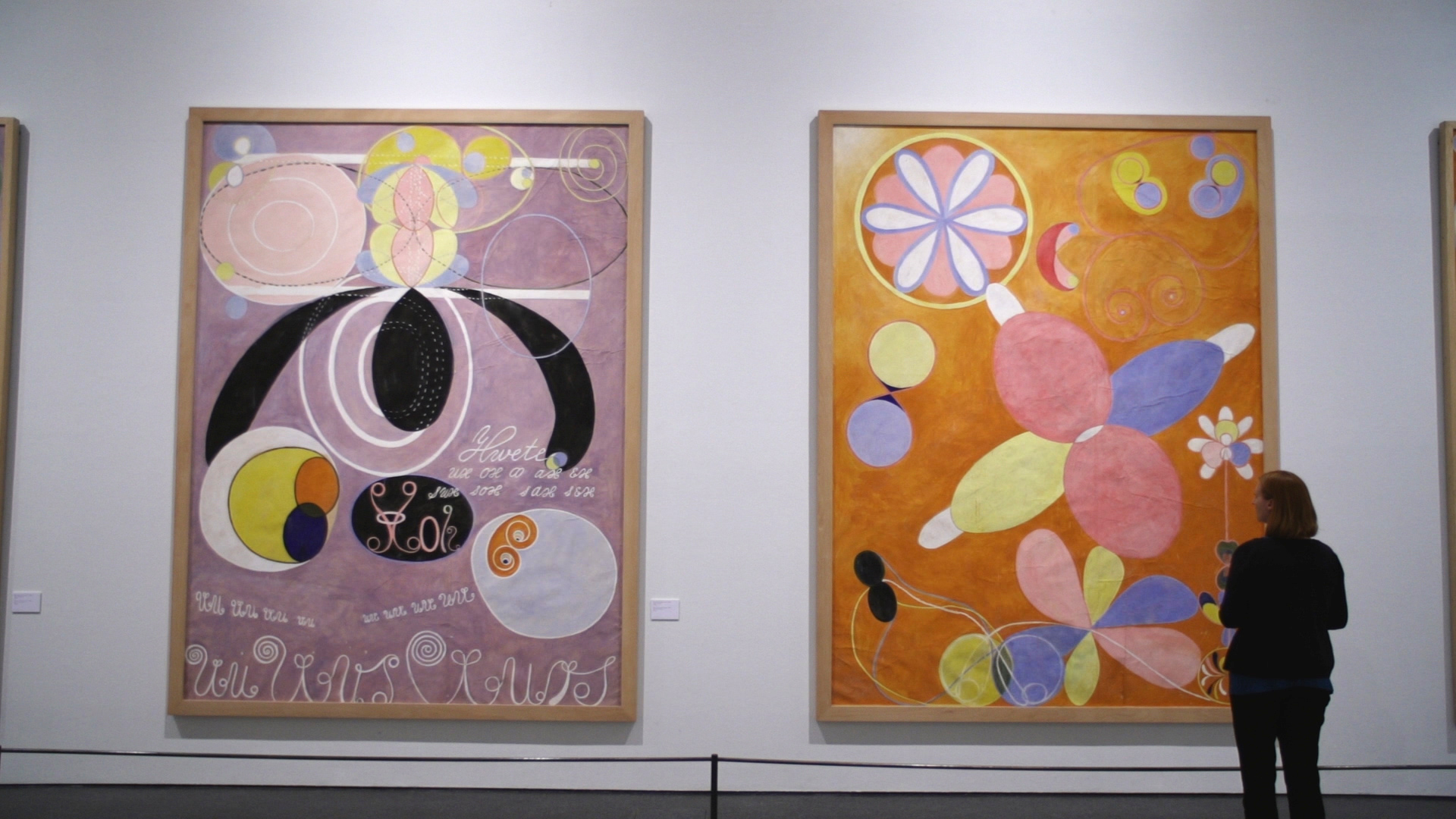
Born in Sweden in 1862, af Klint felt a deep connection to nature at an early age and began to develop interests in botany, mathematics, and visual art. But it wasn’t until she immersed herself in spiritualism that all three would converge to form her artistic destiny. Af Klint was so taken by spiritualism and Theosophy that she formed a group along with four other women known as The Five. Driven by their beliefs in unseen spirits, the group organized regular séances to communicate with higher powers known as the High Masters. During these rituals, af Klint would perform automatic drawings, a practice that allowed an invisible force to paint “through her.” The results were unprecedentedly visionary works of abstract shapes and patterns—spirals, grids, pyramids, intersecting circles—that evoked nature, science, religion, and an otherworldly dimension that connects all three.
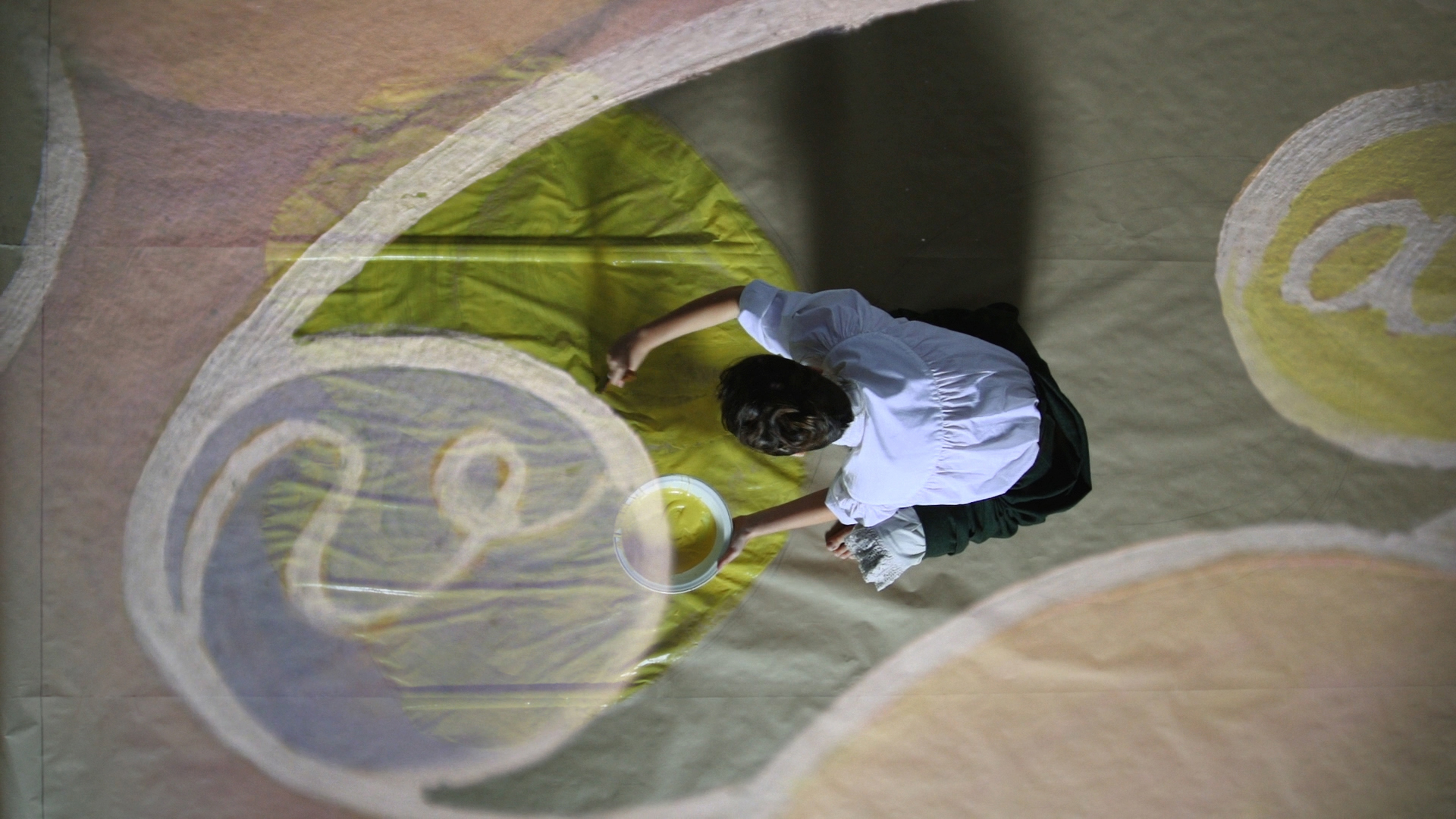
How unprecedented, you ask? In one stunning scene, Dyrschka places af Klint’s paintings side by side with works by world-renowned male artists like Paul Klee, Wassily Kandinsky, Piet Mondrian, and Andy Warhol, clearly noting that af Klint’s work predated theirs by several years, sometimes decades. Yet, history only remembers these men. Why? Dyrschka’s documentary both illuminates and investigates, the former by way of af Klint’s prolific and breathtaking body of work and the latter by positing the very likely theory that af Klint unknowingly invented abstract art, but her male contemporaries took the credit. In fact, the film goes so far as to suggest that Kandinsky may have stolen her style of abstraction after af Klint’s spiritualist mentor, Rudolf Steiner, showed him some of her works.
Dyrschka makes a convincing case of theft, which makes af Klint’s absence from art history books and the permanent collections of modern art museums feel that much more unjust. More than a century after the artist invented a new artistic language, af Klint finally received the recognition she deserved, with a 2018 retrospective at the Guggenheim in New York, which dovetailed into Dyrschka’s documentary. As for why it took so long, Dyrschka told The Guardian: “It’s easier to make a woman into a crazy witch than change art history to accommodate her.”
Perhaps it’s pure coincidence that Hildegard von Bingen and Hilma af Klint have a similar ring to their names—as do both films’ names, in fact. Or perhaps there’s a higher hand at play. What’s undeniable is that both carved their own extraordinary paths in worlds designed for and by men.
Stream Vision: From the Life of Hildegard von Bingen and Beyond the Visible — Hilma af Klint now on Kino Film Collection.
Beyond the Visible — Hilma af Klint (2019)
The subject of a 2018 awe-inspiring retrospective at the Guggenheim Museum, Hilma af Klint was an abstract artist before the term even existed. This course-correcting documentary describes not only the life and craft of af Klint, but also the process of her mischaracterization and erasure by both a patriarchal narrative of artistic progress and capitalistic determination of artistic value.

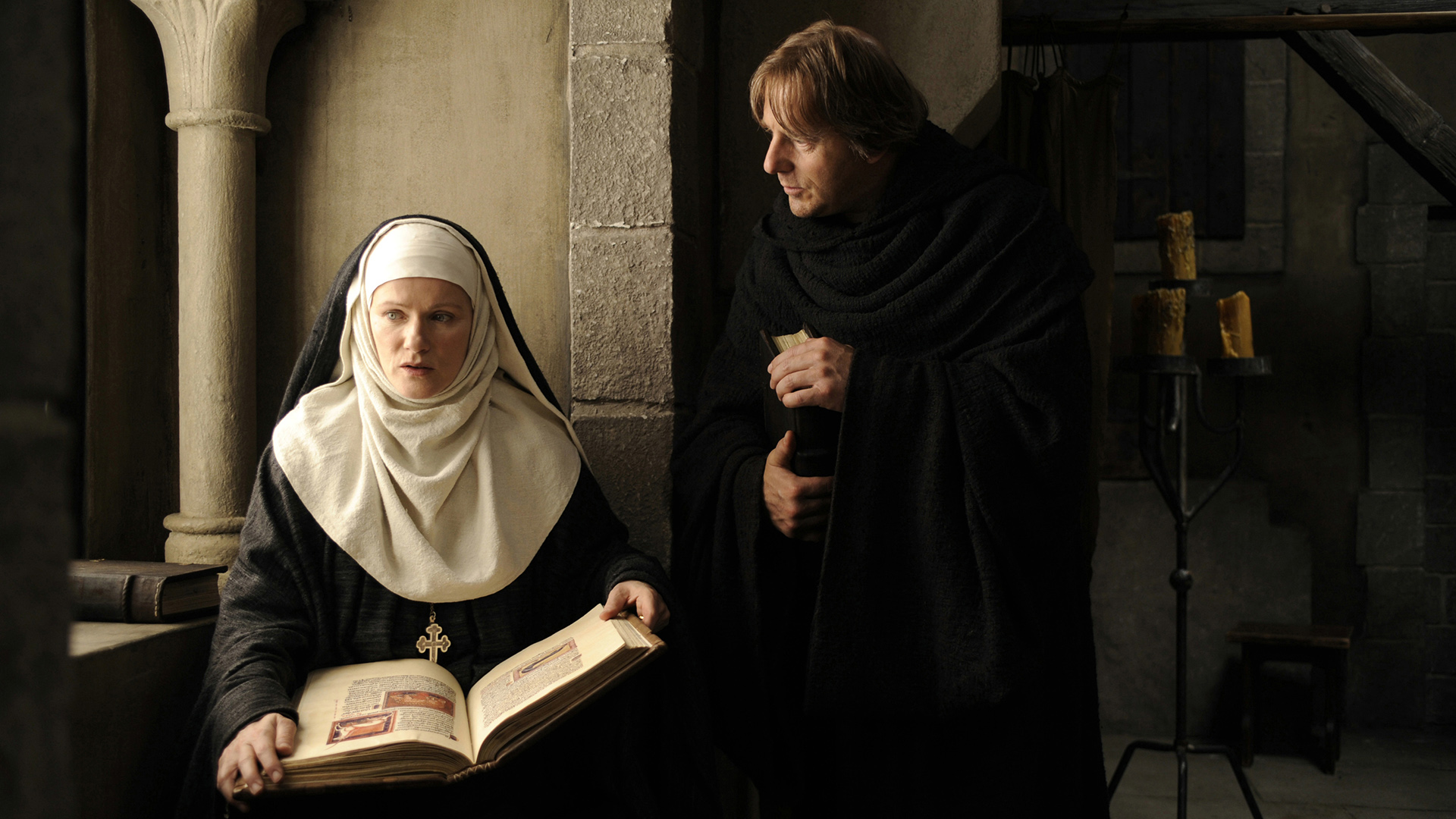
Vision: From the Life of Hildegard von Bingen (2009)
Hildegard von Bingen, a visionary 12th-century Benedictine nun, mystic, composer, and herbalist, was truly ahead of her time. In Vision, Margarethe von Trotta captures Hildegard’s extraordinary drive to expand women's roles in the Church while defending her divine revelations. Lushly shot in medieval cloisters, the film is a vivid portrait of an iconoclastic leader attuned to faith and change.