


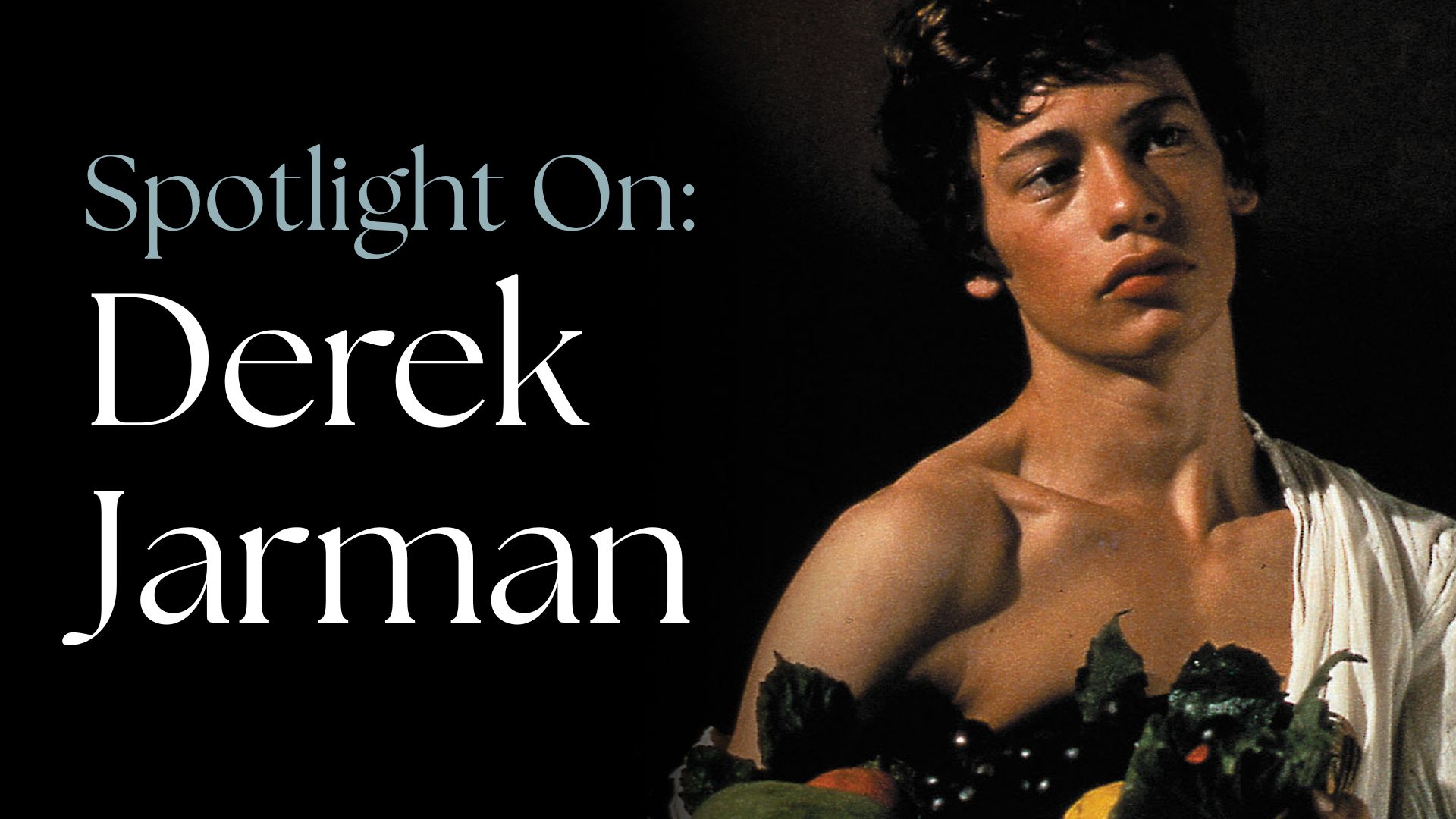
Who Is Derek Jarman? Meet the Queer Auteur Who Leapt Across Time and Space
If anyone can be called a Renaissance man, it’s Derek Jarman. Over the course of his 52-year lifespan, he went on to be a filmmaker, painter, gardener, gay rights activist, and even a saint. His multifaceted nature was especially evident in his works as a filmmaker who transcended the boundaries of time, space, and perspective. In continuation of our August Auteurs series, we examine and celebrate the life and career of Derek Jarman.
From a young age, Jarman became familiar with the rampant homophobia and violence queer individuals risked facing in British society. In an interview featured in the biographical film Derek (2008), Jarman recalled having been punished by being beaten and threatened with expulsion in prep school as a child after being caught in bed with another boy. Despite having experienced the risks of being openly queer from such an early age, Jarman paved the way for queer artists after him by consistently creating and living with an open, unrelenting attitude.
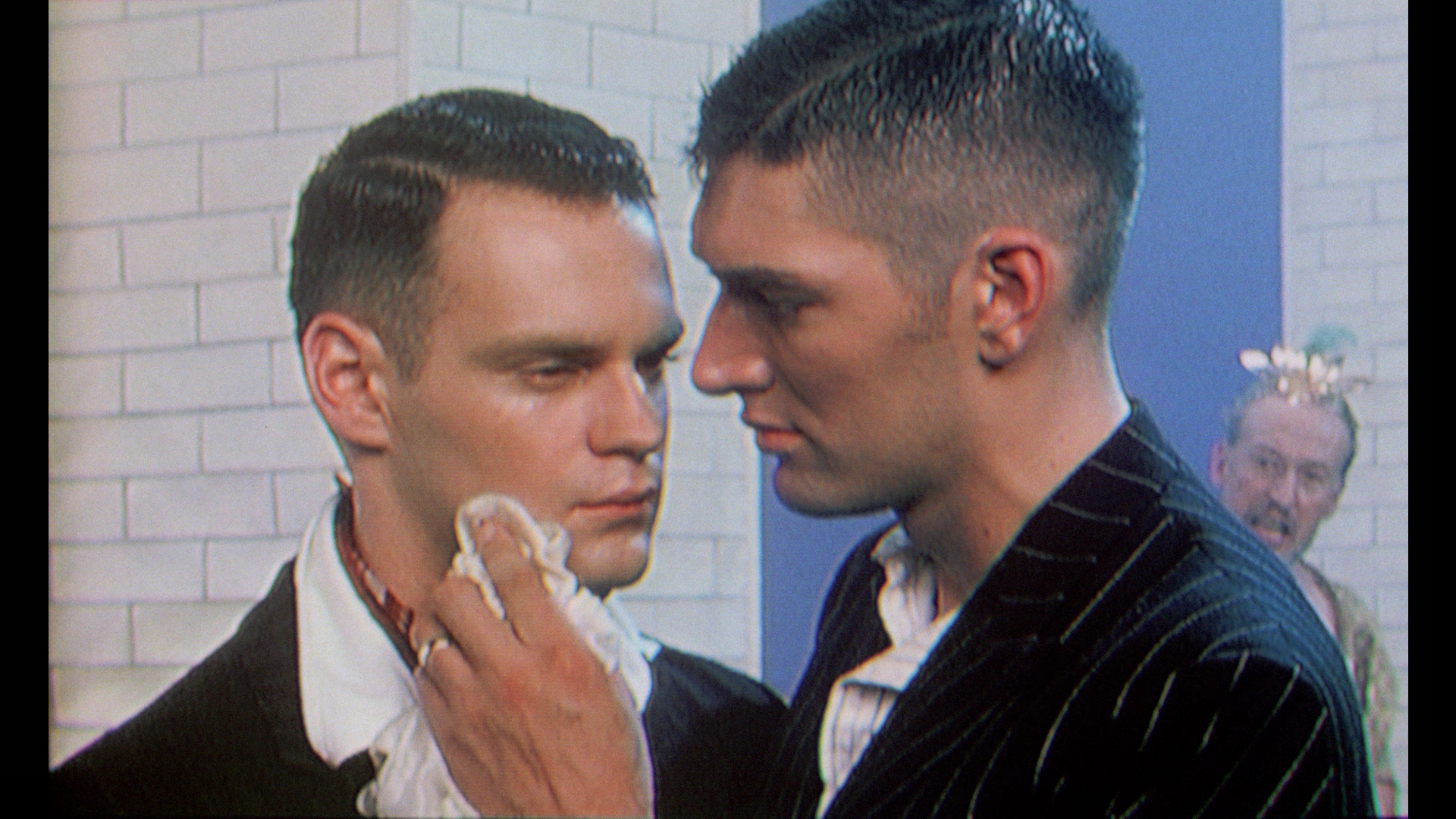
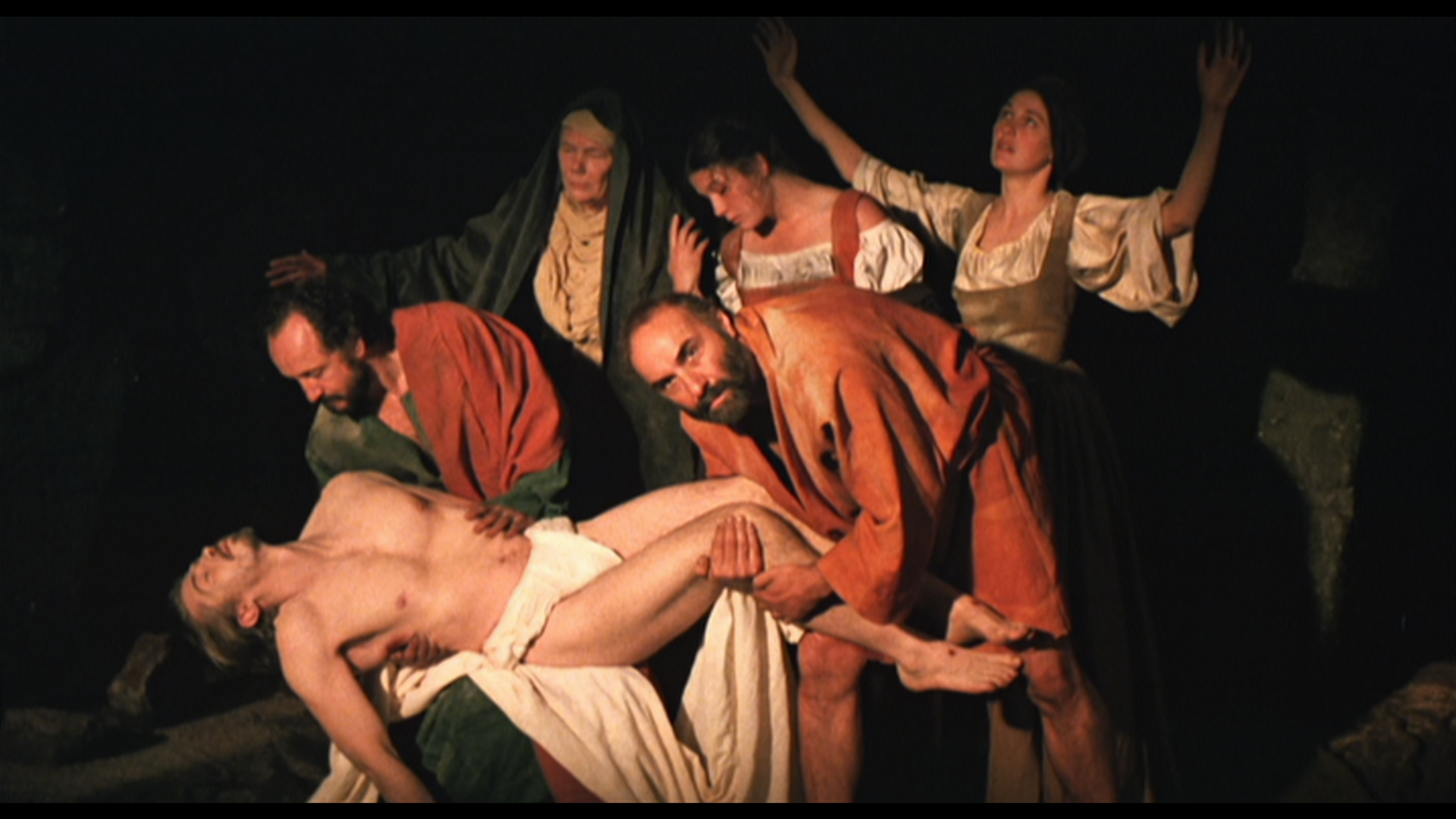
Having studied painting and set design at the Slade School of Fine Art from 1963 to 1967, Jarman staged visuals with a painterly, theatrical flair. Every shot in his filmography could be displayed on its own in a gallery. However, as an experimental filmmaker, he also embraced and even welcomed messiness in his artistic process. He often shot on Super 8mm film, which allowed him to work outside the constraints of tight budgets, mainstream commercial influence, and demanding equipment. Heavy grain, layered images, and shaky footage contribute to the urgency and chaos Jarman portrayed within his works, and they remain visual hallmarks of his free approach to filmmaking. The artistic freedom he achieved for himself also allowed him to construct narratives in highly nontraditional structures. Jarman often did not utilize chronological order, heavy dialogue, or conventional plot structure. Instead, his films can be treated as mosaics in which scattered, jagged pieces are arranged together to form a larger, intricate picture.
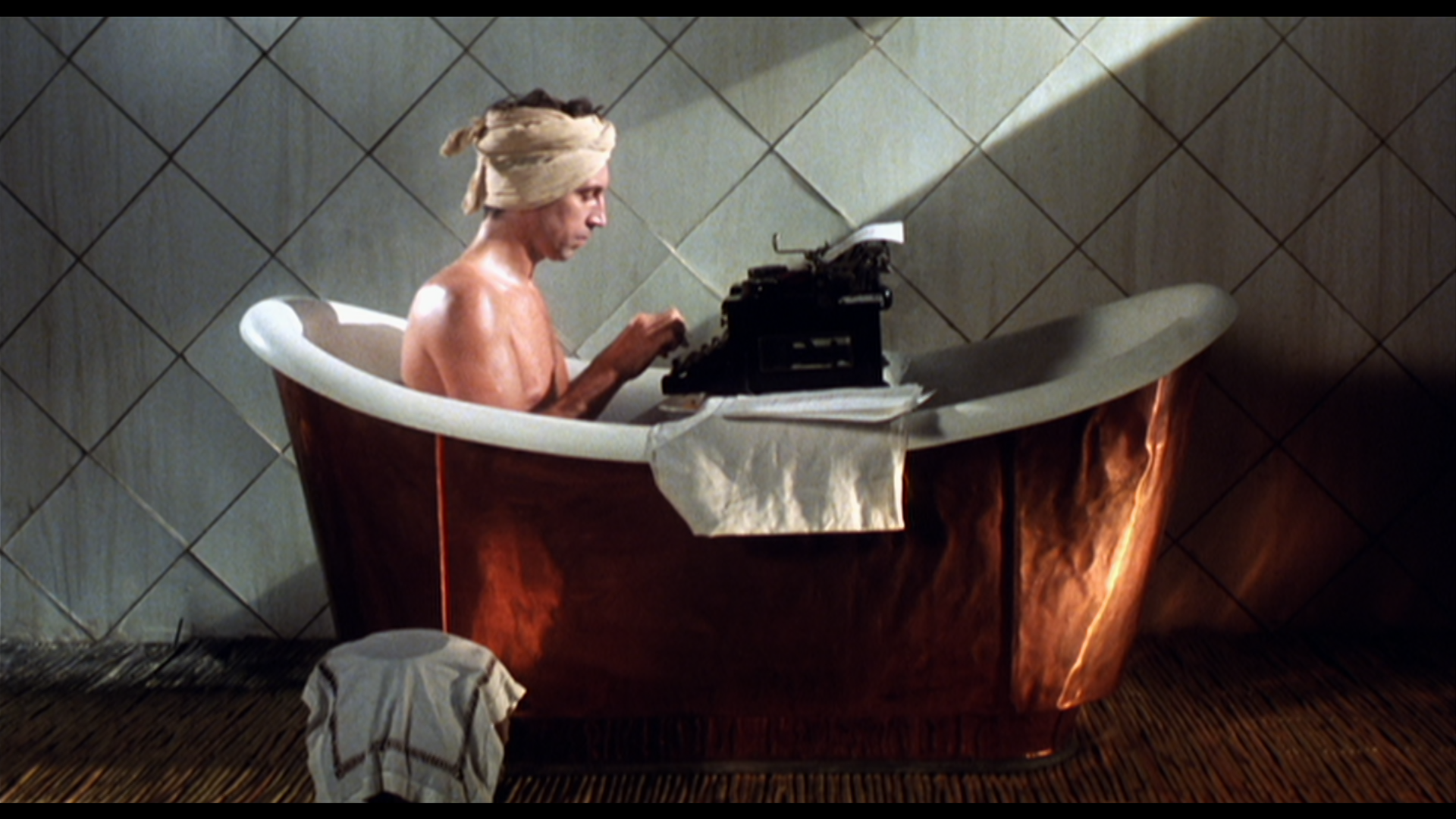
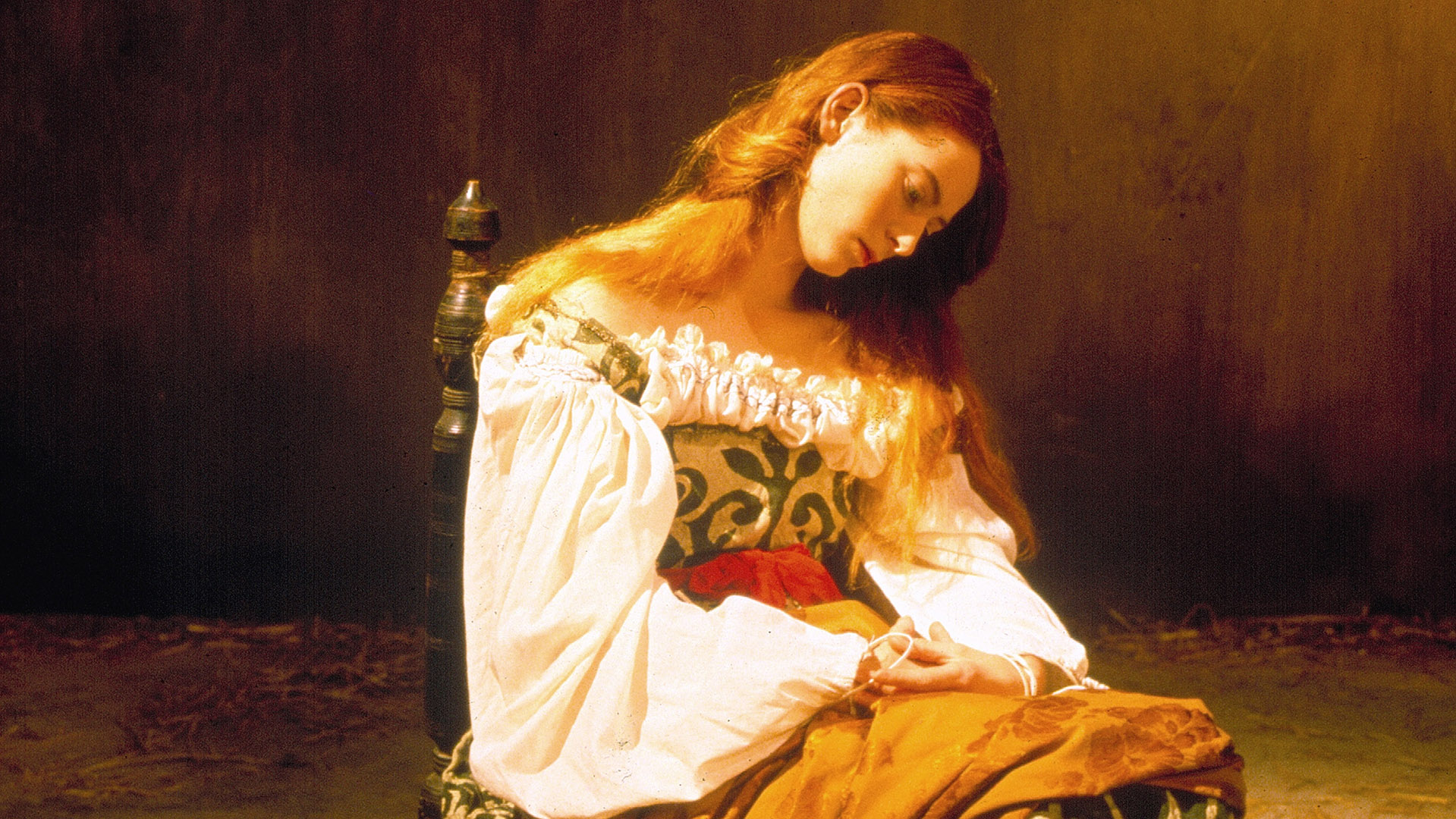
Jarman made films that were not only unabashedly queer, but he also recontextualized both history and the present through this lens. For example, take Caravaggio (1986), which won the Silver Bear for an outstanding single achievement at the 36th Berlin International Film Festival. In this historical film painting new life into the famous artist, Jarman put Caravaggio’s sexual identity at the forefront by centering the plot on a bisexual love triangle. However, this was not enough for Jarman’s inventive nature. He included multiple anachronisms throughout the film, including cigarettes and typewriters, sprinkling early 17th century Rome with contemporary inventions. Queerness is not rooted in time or space, and Jarman understood this best of all.
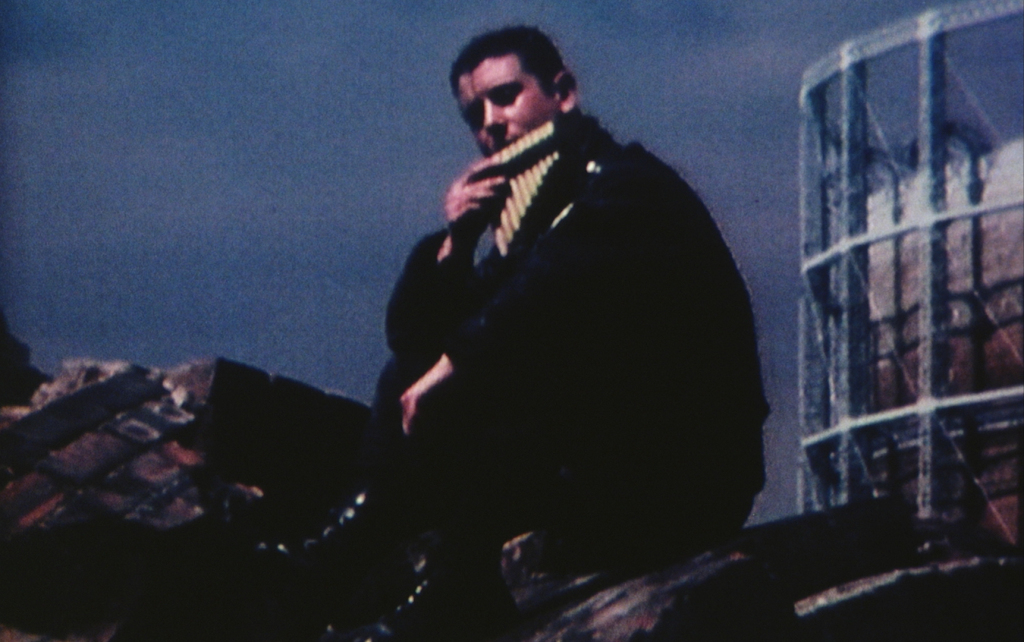
Jarman’s films were also deeply rooted in his work as a gay rights activist, for which he was arrested in 1992 while attempting to march on Parliament alongside other demonstrators to demand the repeal of anti-gay laws. He often used surreal imagery to more effectively symbolize his strong political sentiments. In The Last of England (1987), he channeled his fury toward Thatcherism and its many anti-gay policies and shaped it into a futuristic, apocalyptic collage of a decaying England. Rugged imagery, such as a distressed bride tearing off her own wedding dress with shears and superimposed shots of burning fires on top of the shadowy cityscape, elicits a sense of destruction and a loss of innocence.

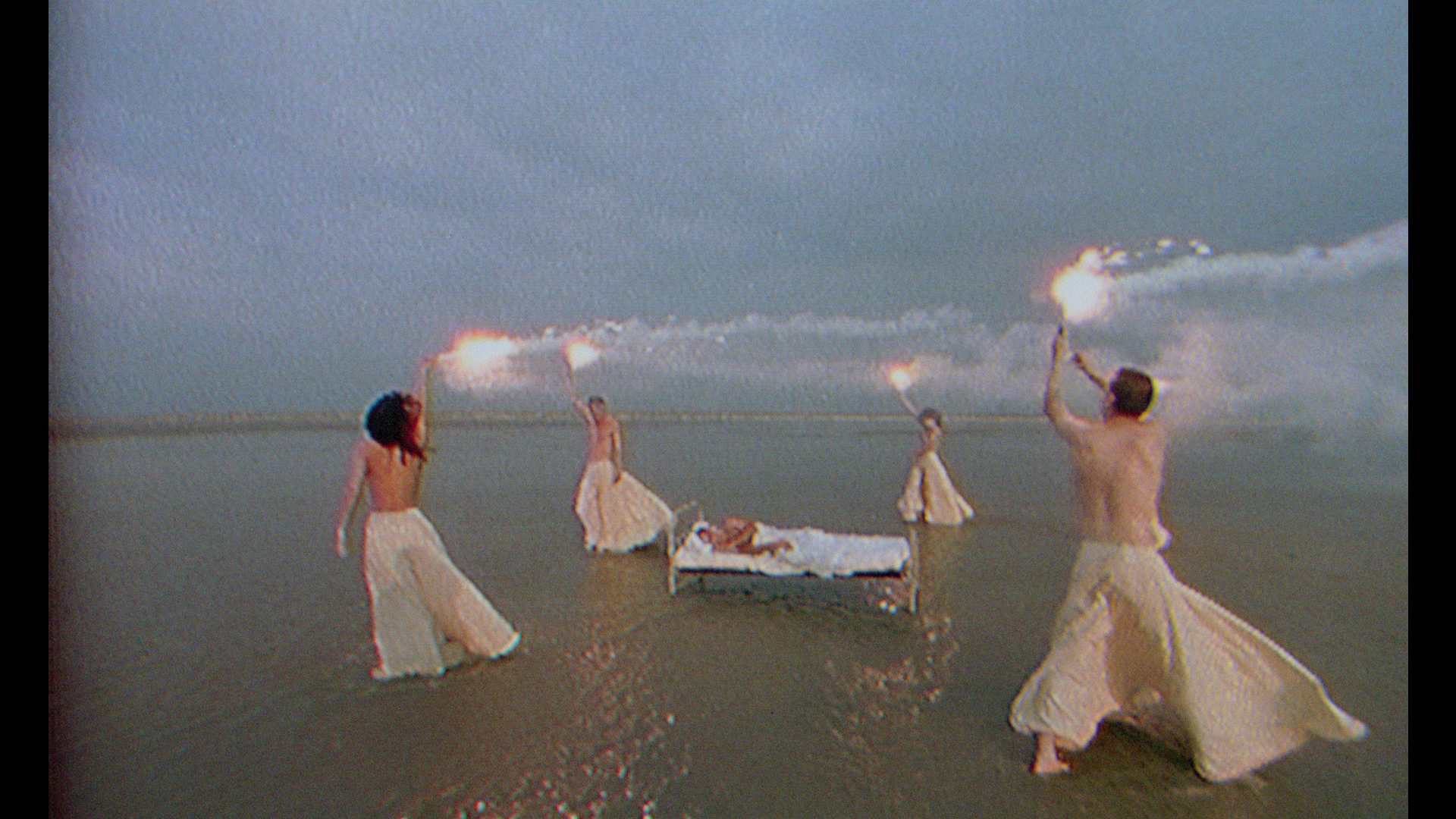
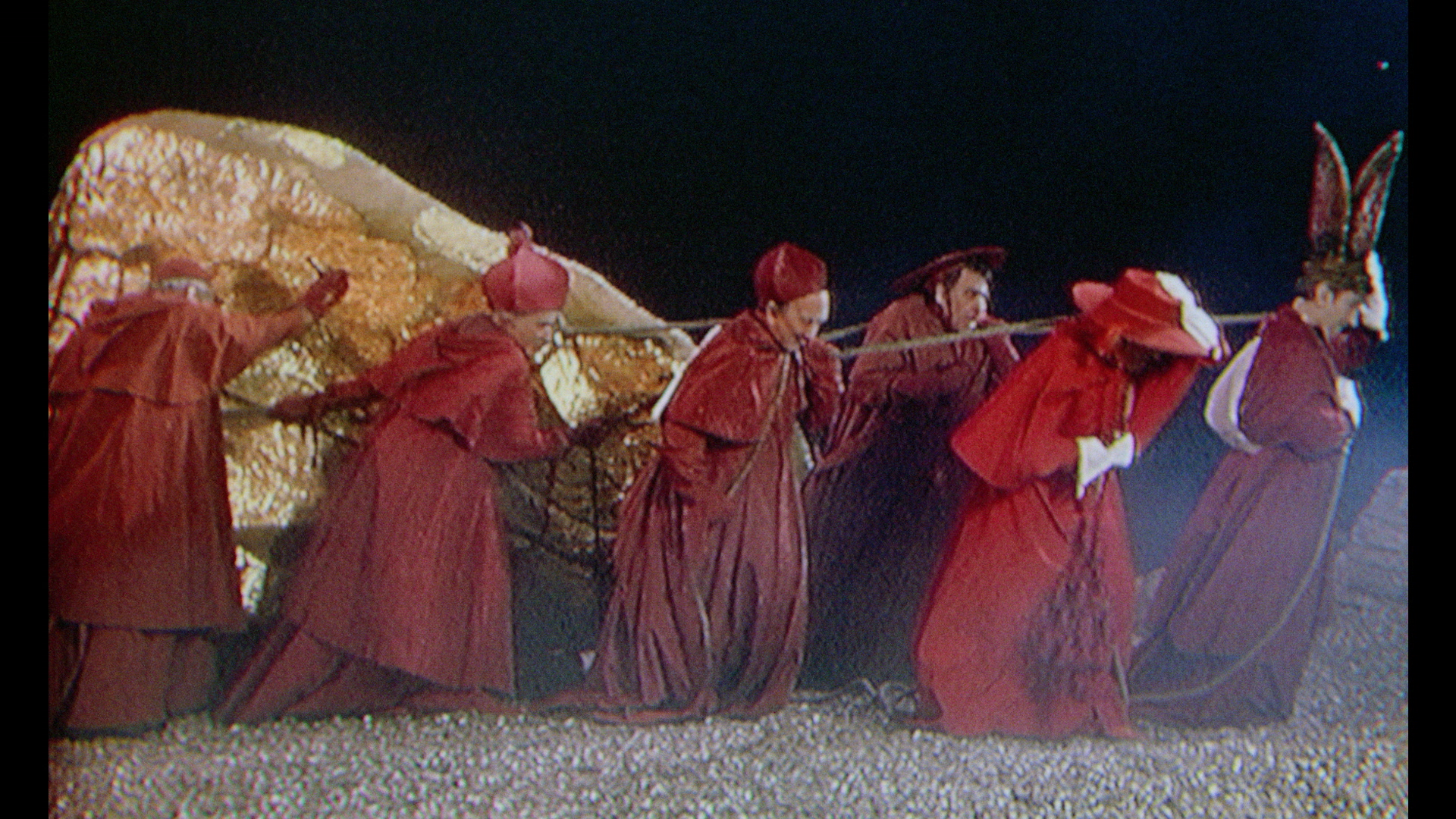
In The Garden (1990), Jarman illustrated the suffering endured by queer people during the 20th century through the use of biblical stories and figures, such as the Madonna and the crucifixion of Jesus Christ. Figures donned in white encircling a man lying in a bed on the beach while holding torches remind us of a vigil, specifically one mourning the queer community as they suffered from the AIDS crisis. Loosely replacing Jesus Christ in the story of his crucifixion is a gay couple bound and gagged, humiliated as they are tarred and feathered. In a shot imitating Leonardo da Vinci’s The Last Supper, a group of old men sit at a long table while a narrator recounts the death of his friends, bringing us back to the vigil. Scenes like this illustrate Jarman’s relentless fight for gay rights, both in his career and his personal life.
Through his filmmaking, Jarman also cultivated a strong network of close collaborators. Tilda Swinton, who notably appeared in most of his films, is often referred to as his primary muse. In Caravaggio, she plays Lena, one of the painter’s lovers caught in a jealous affair. In The Last of England, she plays the bride in the iconic dress-ripping scene. In The Garden, she portrays the Madonna, who is chased down by intrusive paparazzi in Jarman’s recreation of the biblical figure. Swinton brought the strangeness needed to embody the surrealism in Jarman’s films.
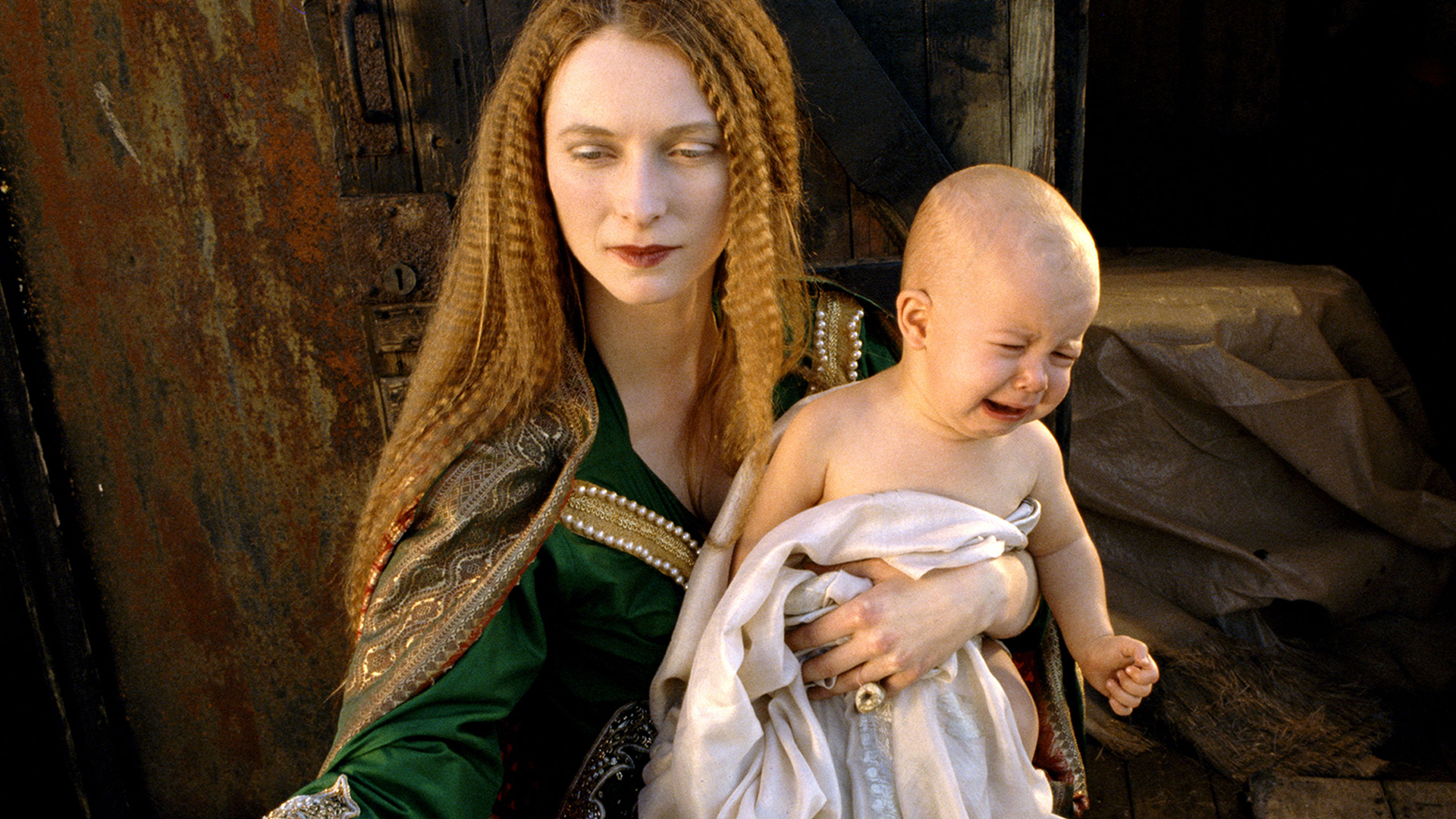
After being diagnosed as HIV positive in 1986, Jarman persisted in creating even more boundary-pushing works. In fact, six of Jarman’s feature films were released between 1987 and 1993. He was also one of England’s first public figures to openly disclose his diagnosis, taking a step toward destigmatizing the disease and those afflicted with its symptoms. His final feature film, Blue (1993), was released less than half a year before his death from AIDS-related complications. It features a voiceover from Jarman himself ruminating on his losing battle with AIDS, mortality, and the abstract over a blue screen, leaving behind the legacy of a man who unapologetically transcended the expected in favor of what felt most truthful.
You can stream Caravaggio, The Garden, and The Last of England on Kino Film Collection.
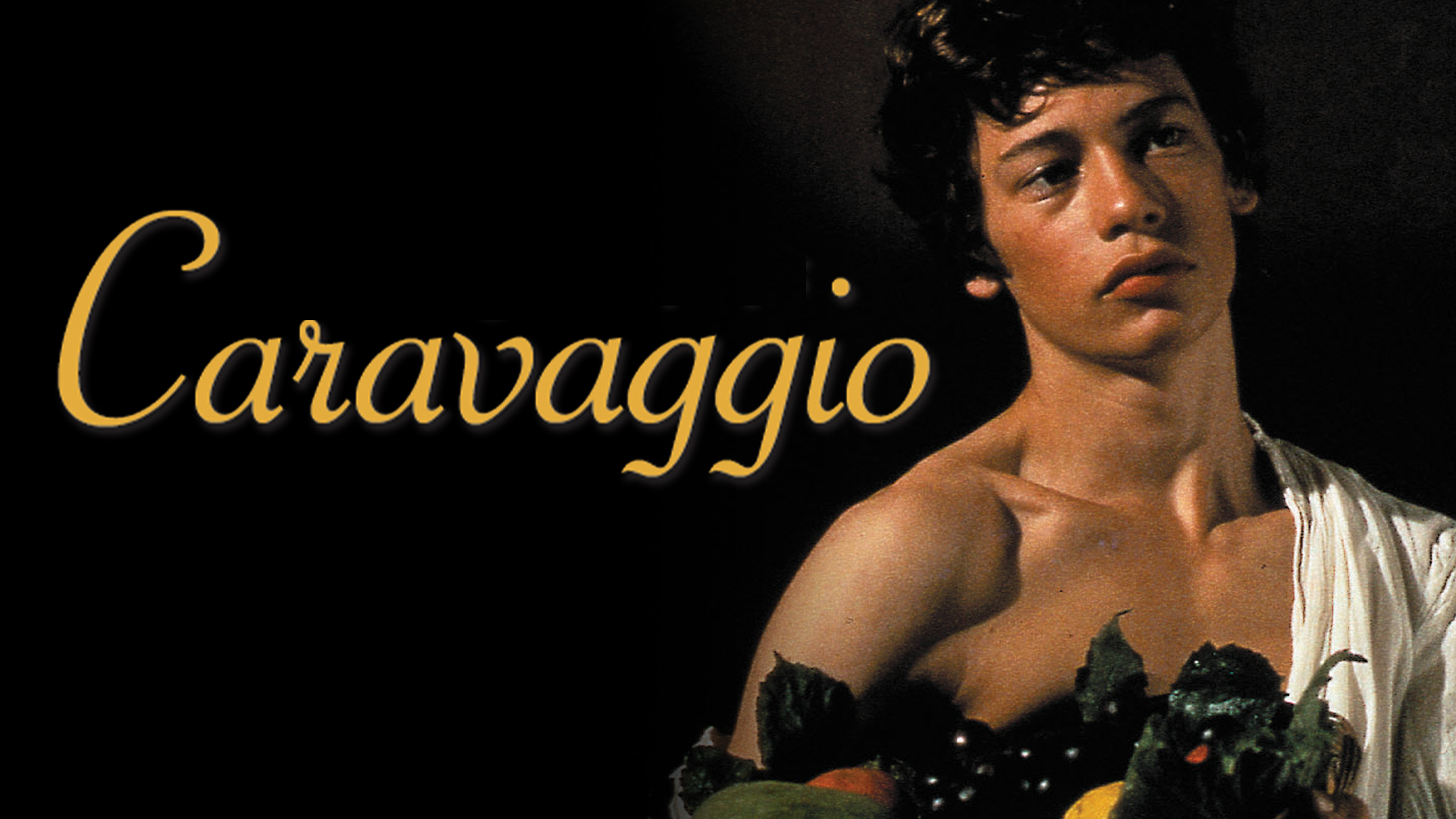
Caravaggio (1986)
Derek Jarman's profound reflection on art, sexuality and identity retells the life of the celebrated 17th-century painter through his brilliant, nearly blasphemous paintings and his flirtations with the underworld. The painter's precise aesthetic makes up the movie's visuals, and touches Jarman's major concerns: history, homosexuality, violence and the relationship between painting and film.

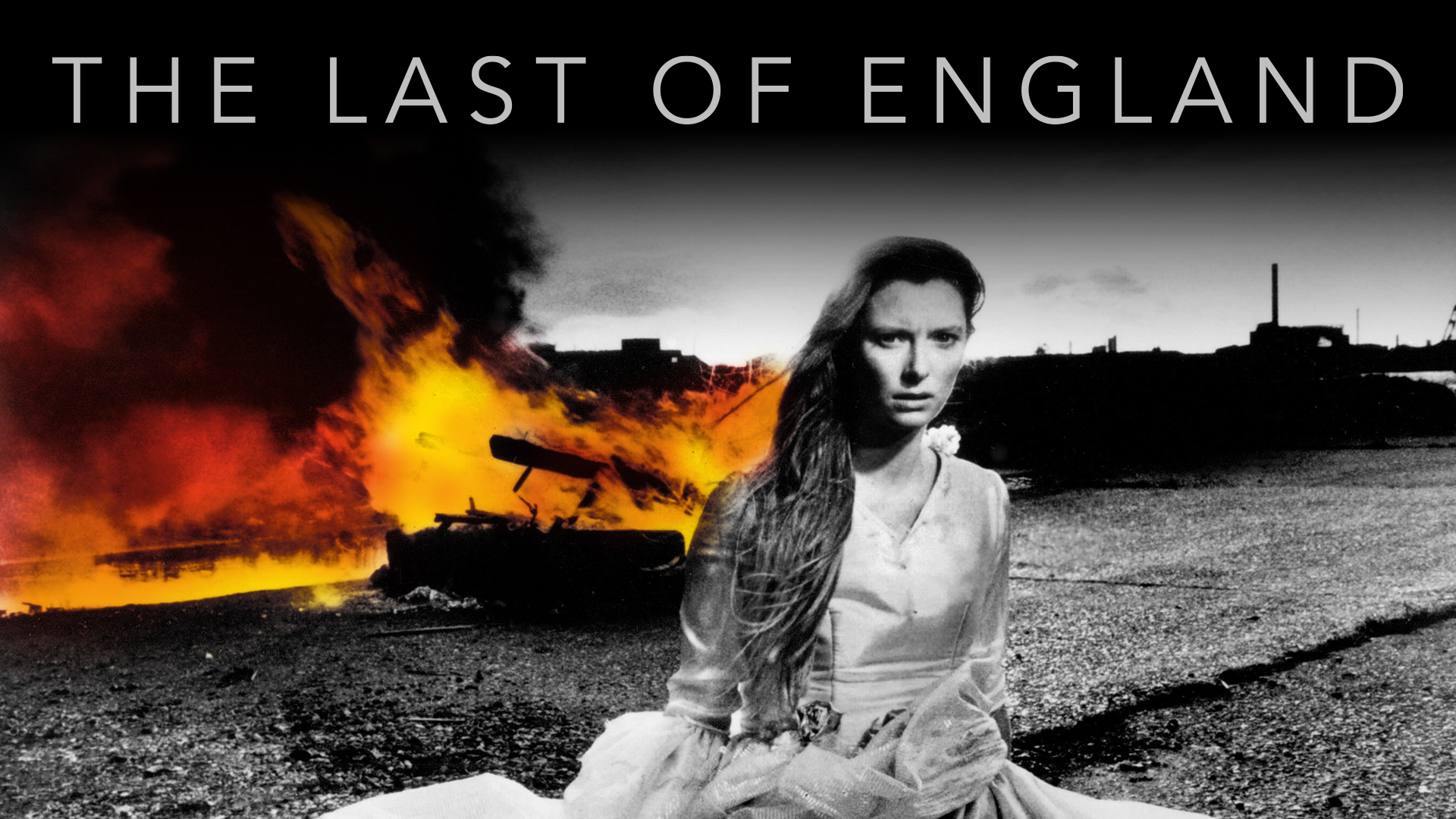
The Last of England (1987)
An apocalyptic roar of a movie, Derek Jarman's “The Last of England” stars Oscar winner Tilda Swinton in his lament for the country he once knew and what he feared it would become. A kaleidoscopic view of England, filled with rage at Margaret Thatcher's conservative reign and haunted by the continuing scourge of AIDS, this film is both deeply personal and grimly historical.
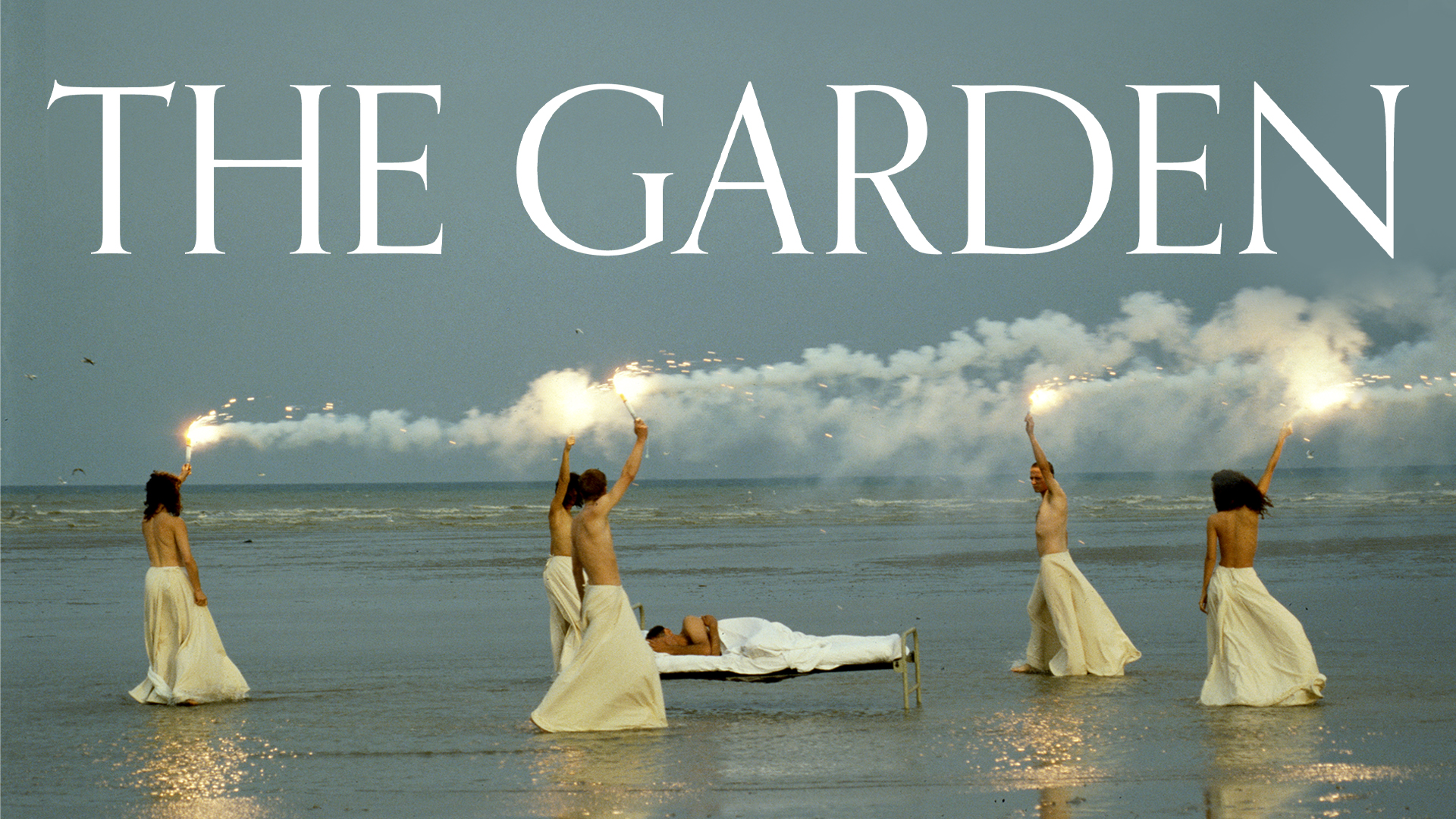
The Garden (1990)
Directed by Derek Jarman and starring Tilda Swinton, this kaleidoscopic film shows the filmmaker’s genius at its most coruscating, featuring an over-the-top Hollywood-style musical number, nightmare images of tar-and-feather queer persecution, and footage of the particularly menacing-looking nuclear power plant that overlooks Jarman’s own garden.