Arnaud Desplechin’s 'Two Pianos' Is a Mesmerizing Study of Duality
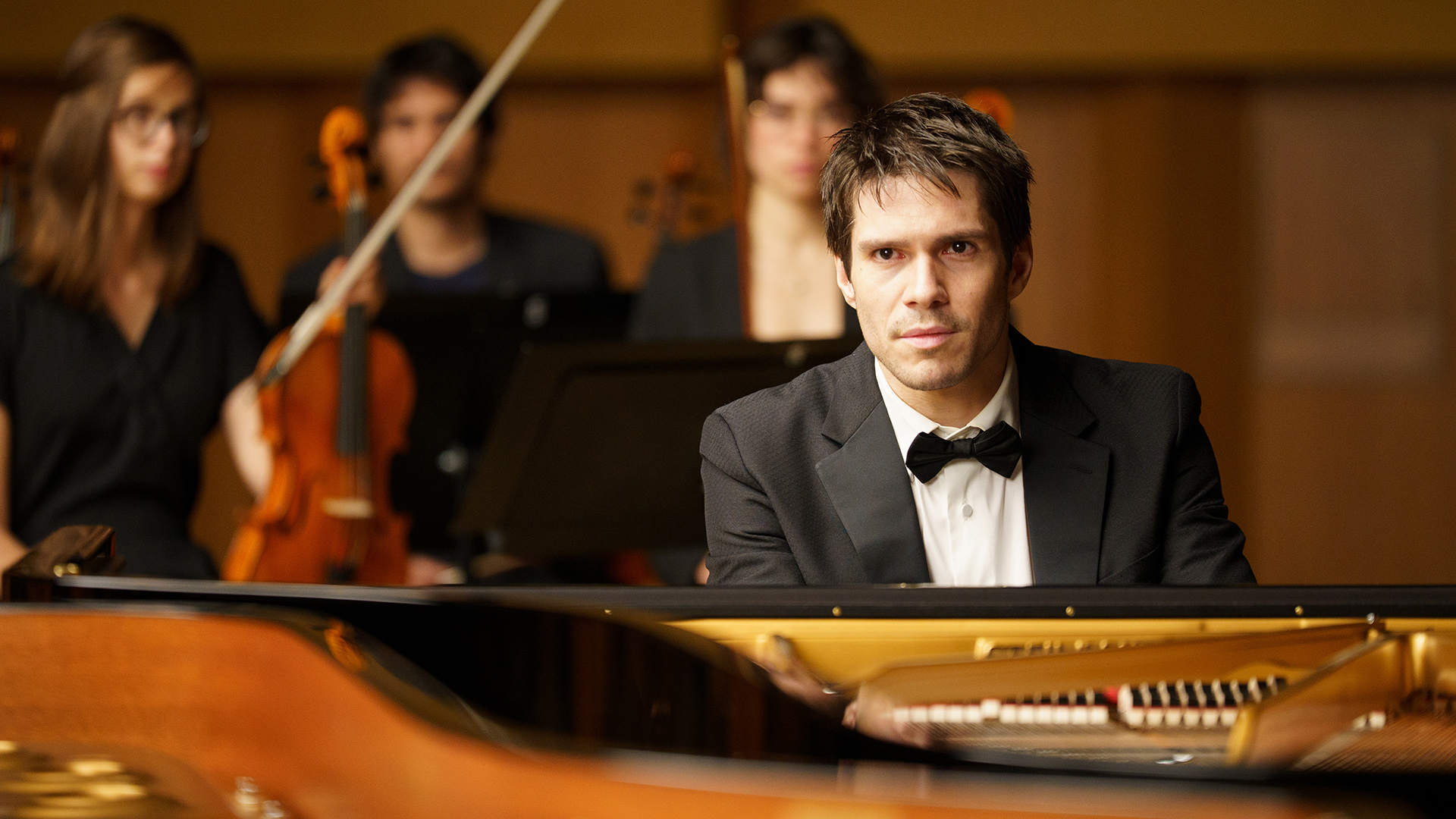
Arnaud Desplechin’s Two Pianos explores a heady combination of themes: love, loss, memory, and choice. (There’s a reason why it’s been called a melodrama, a label that the film wears proudly.) But, apropos of its title, Two Pianos is about duality: two lovers, mentor and protégé, present and past selves. Through the story of piano prodigy Mathias (François Civil), who has returned to his hometown of Lyon to confront a legion of ghosts from his past, the film examines how the dualities of life can both splinter one’s path into infinite “what ifs” and land you squarely in a solo performance you weren’t prepared to play.
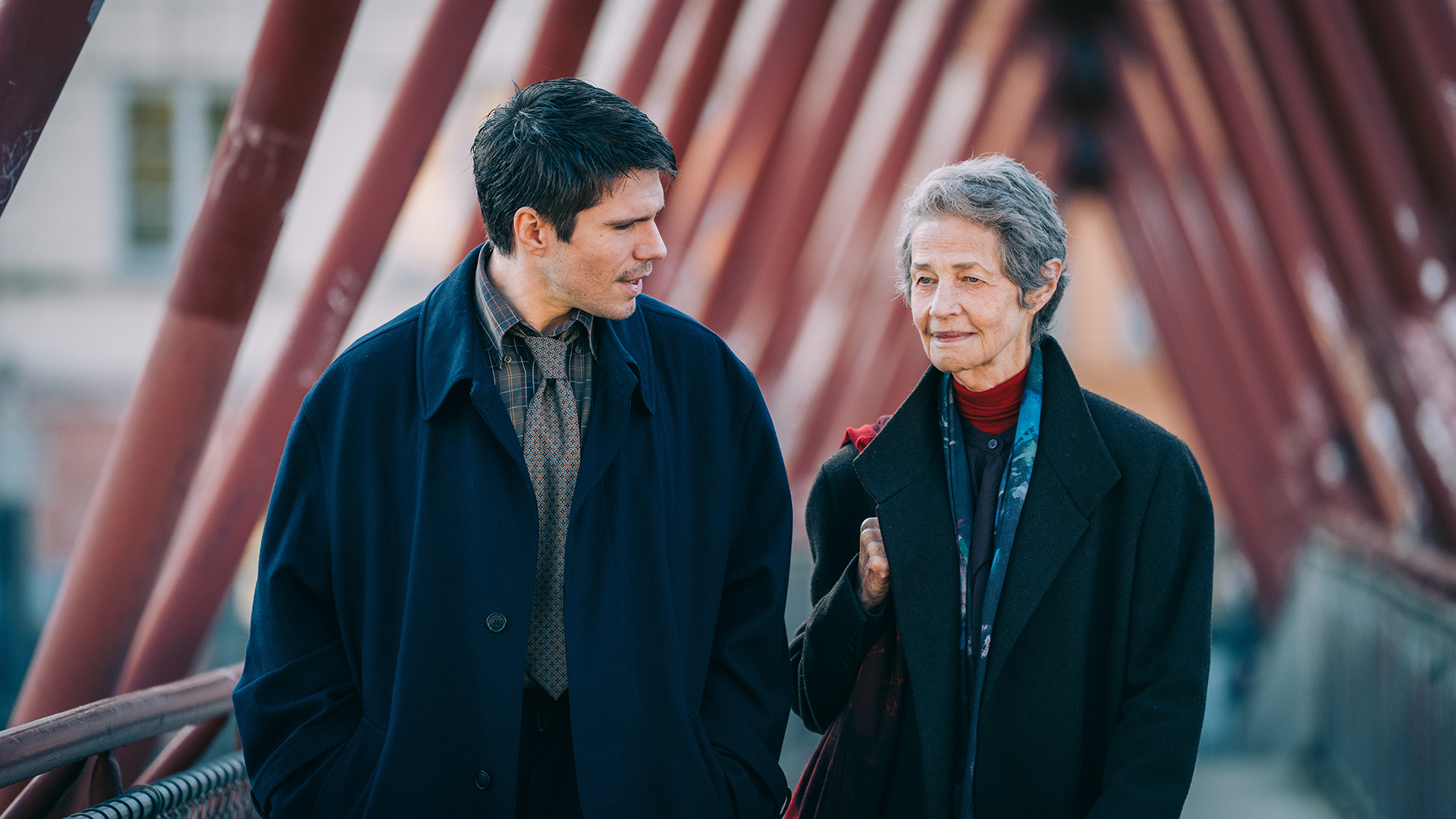
After living in Japan in self-imposed exile, Mathias returns to Lyon when his former mentor, Elena (Charlotte Rampling), invites him to a party. Their reunion further reveals the fraught nature of his hiatus and ends with Elena insisting he return to the piano across from hers, establishing the film’s first duality (and sets the stage for literal duets). When leaving the party, Mathias runs into a woman on his way out of the elevator. The sight of her freezes him in his tracks and drops him to the ground like a sack of potatoes, as the lift door bangs his head. This hints at another duality. The woman turns out to be Claude (Nadia Tereszkiewicz), Mathias’s former lover and wife of his best friend Pierre. In a world of duos, this trio never stood a chance. Three became two when Mathias fled France, and once again after he returns (in a shocking turn of events).
The most mysterious, yet revealing duality comes when Mathias spots a young boy at a park. In a scene that blends Hitchcockian suspense and tinges of Looper-esque sci-fi, the viewer is left wondering, “Is the boy a young Mathias caught in a time loop?” Is he his past self or a consequence of his past self? The disorienting encounter unravels a web of past choices and forces Mathias and Claude to finally confront them. As one door closes with his mentor and another opens with his first love, Mathias finds himself on the knife’s edge of choice. “I split my life in two,” he tells his mother.
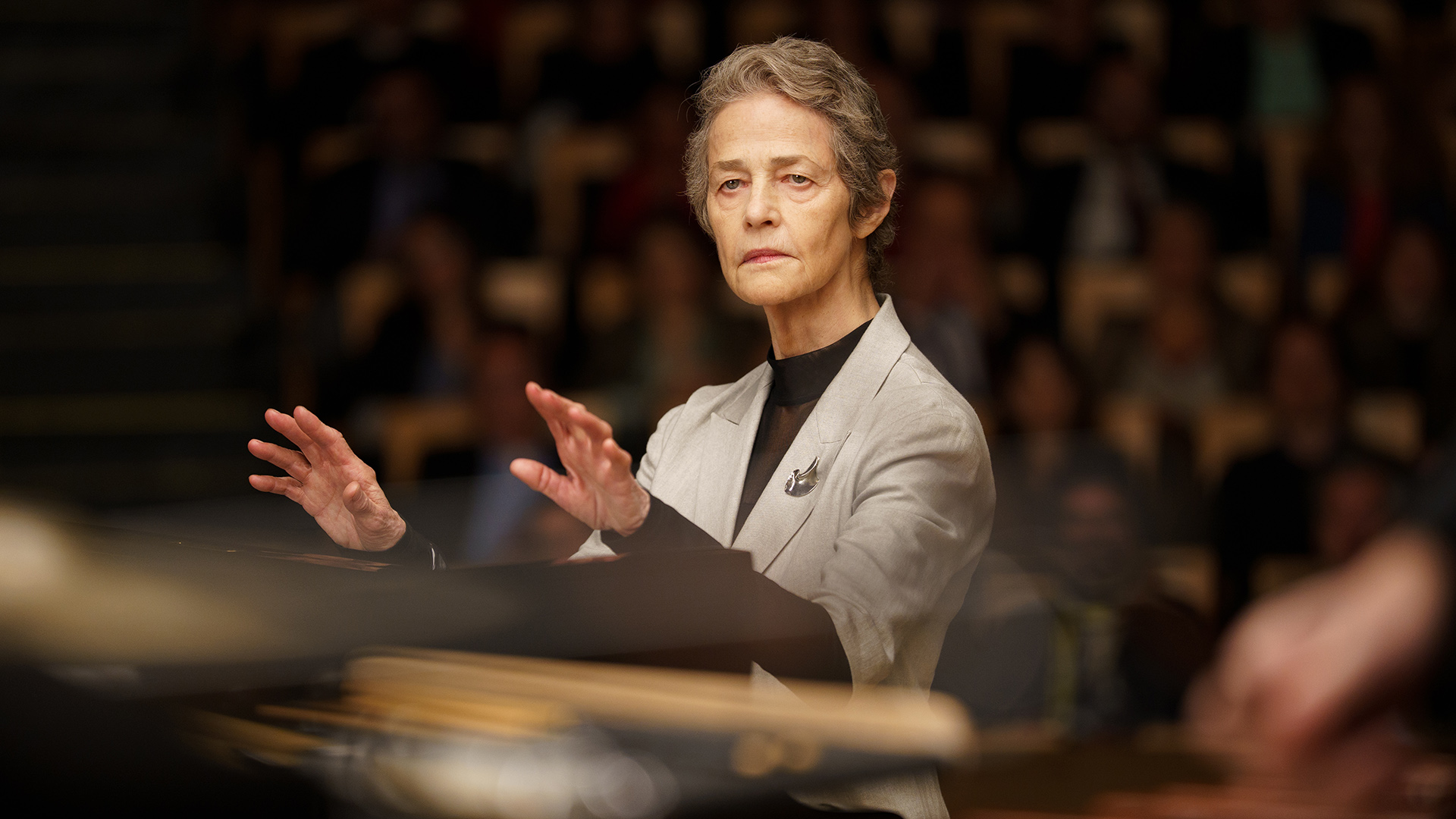
When we sat down with Desplechin to talk about his film, he also noted the many dualities in the film, from the two pianos arranged on stage like the two curved halves of a yin yang to Lyon’s two rivers, the Rhône and the Saône, that exist quietly in the background. “Two rivers, two pianos, two stories, two loves,” Desplechin listed. With the help of a soaring classical score from composer Grégoire Hetzel, watching Two Pianos feels like the mesmerizing and exhilaratingly dizzying experience of seeing double.
Watch our full interview with Arnaud Desplechin below and stream Two Pianos now on Kino Film Collection.
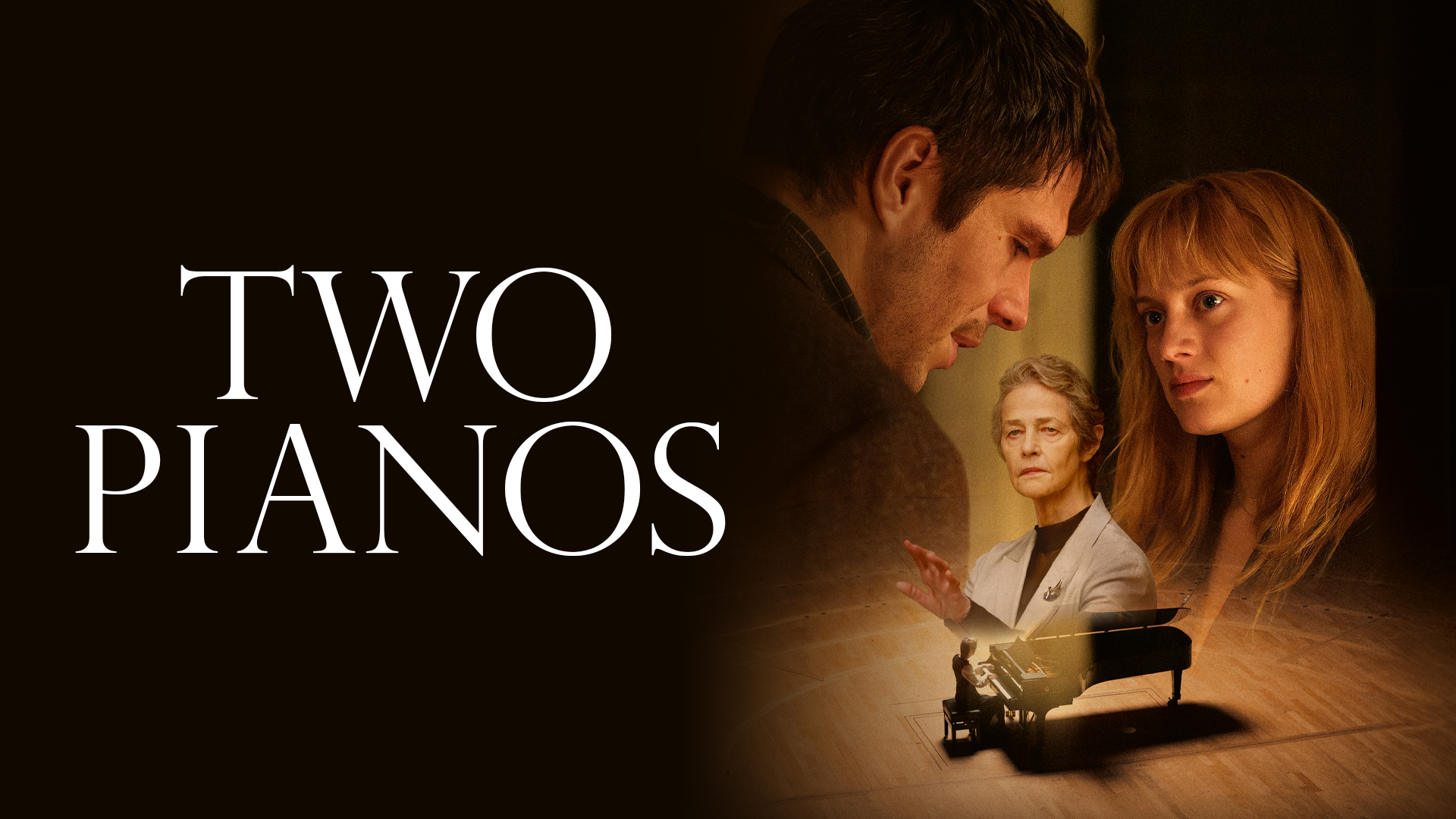
Two Pianos (2025)
After years of exile, pianist Mathias (François Civil) returns to France when his former mentor Eléna (Charlotte Rampling) invites him to perform a series of concerts. But soon after his arrival, a chance encounter with a child who looks just like him throws Mathias into turmoil, threatening to drag him down and leading him back to first love, Claude (Nadia Tereszkiewicz).