


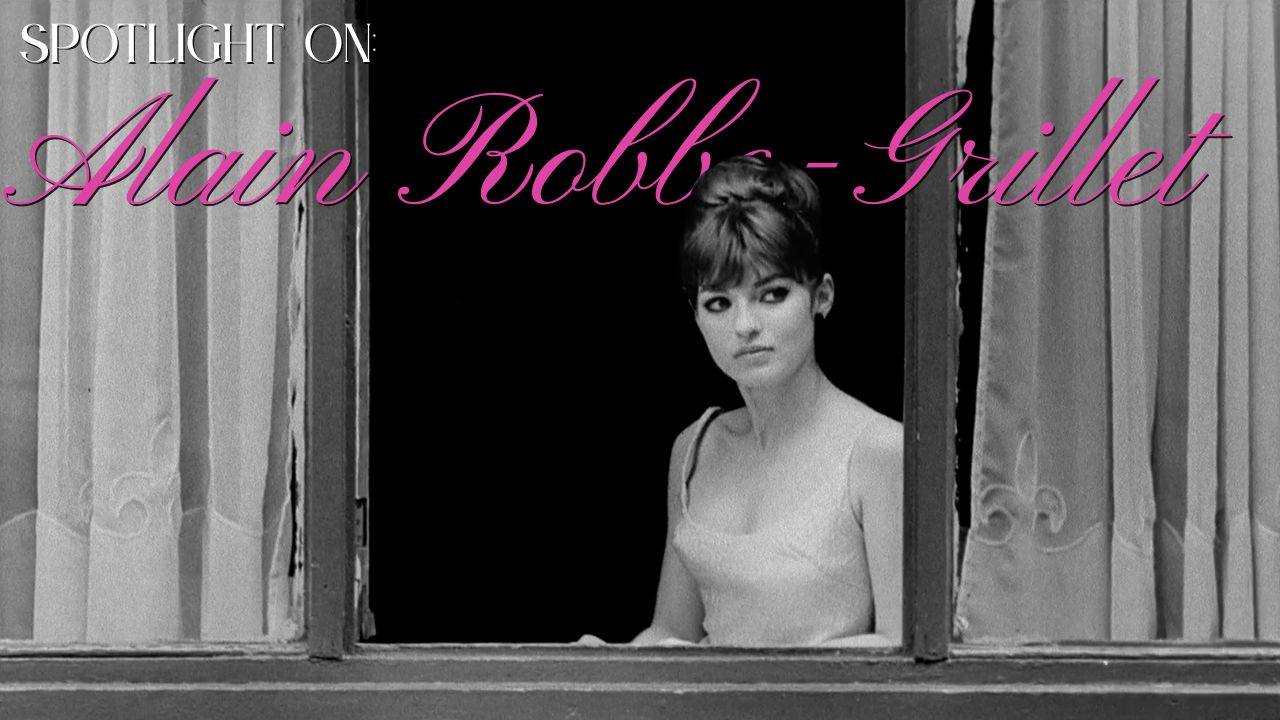
Who Is Alain Robbe-Grillet? Meet French Cinema’s Best-Kept Secret
We need to talk about Alain Robbe-Grillet. Besides being a literary pioneer and groundbreaking screenwriter who penned the landmark Last Year at Marienbad, Robbe-Grillet has made an entire body of work that deserves a place in the French canon. True cinephiles, particularly those partial to French cinema of the ‘60s and ‘70s, may know him well, but he was largely overshadowed by contemporaries like Jean-Luc Godard and François Truffaut. Let this article set the record straight: Robbe-Grillet was no less of an auteur. His signature brand of experimental meta-film, infused with his keen eye for art direction and style, makes him French cinema’s best-kept secret.
Born in 1922 in Brest, France, Robbe-Grillet would go on to become a key theoretician of the nouveau roman (new novel) movement, which rejected traditional storytelling and replaced linear plot, omniscient narration, and traditional characterization with an acute focus on objects. It’s clear that Robbe-Grillet later applied the principles of nouveau roman to his filmmaking, notably in the screenplay for Last Year at Marienbad (1961), which observes a love affair through nonlinear time, unreliable narrators, and blurred reality. What the film lacks in plot it more than makes up for in stunning architecture, set design, and cinematography, leaving viewers with a feeling rather than a clear story, much like a good dream.
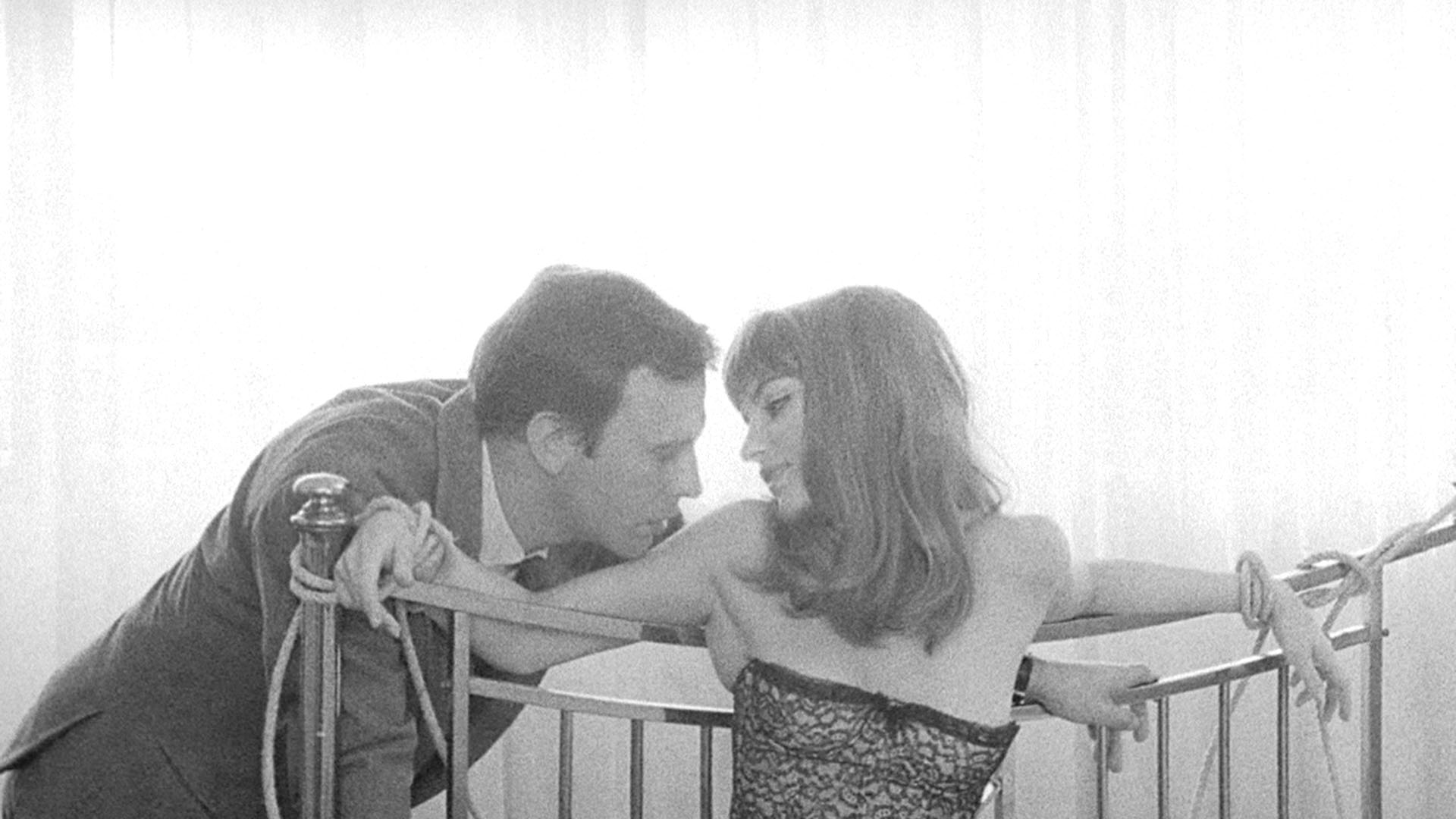

Stills from Trans-Europ-Express.
From there, Robbe-Grillet began writing and directing his own films and soon a signature style emerged. Yes, they proudly embodied the tenets of nouveau roman, but they were also seductive, if not pulsating with erotic charge; meticulously designed, often using surreal and abstract environments; and last but certainly not least, teeming with impeccable eyeliner that could give Anna Karina a run for her money. (Somebody give his makeup artist a posthumous raise.) This mélange of elements combine to create hypnotic, mysterious, and completely irresistible films that ooze with style. Robbe-Grillet’s works are like those beautiful puzzles you can find in the gift shop of a modern art museum. You could care less about solving them; they’re meant to be prominently displayed on your coffee table and admired by all.
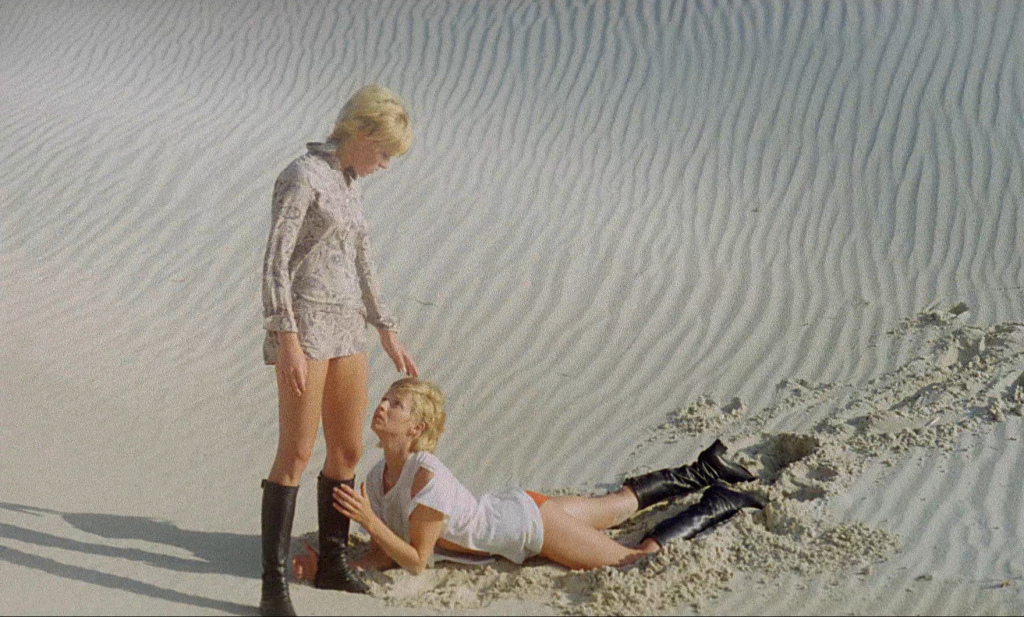
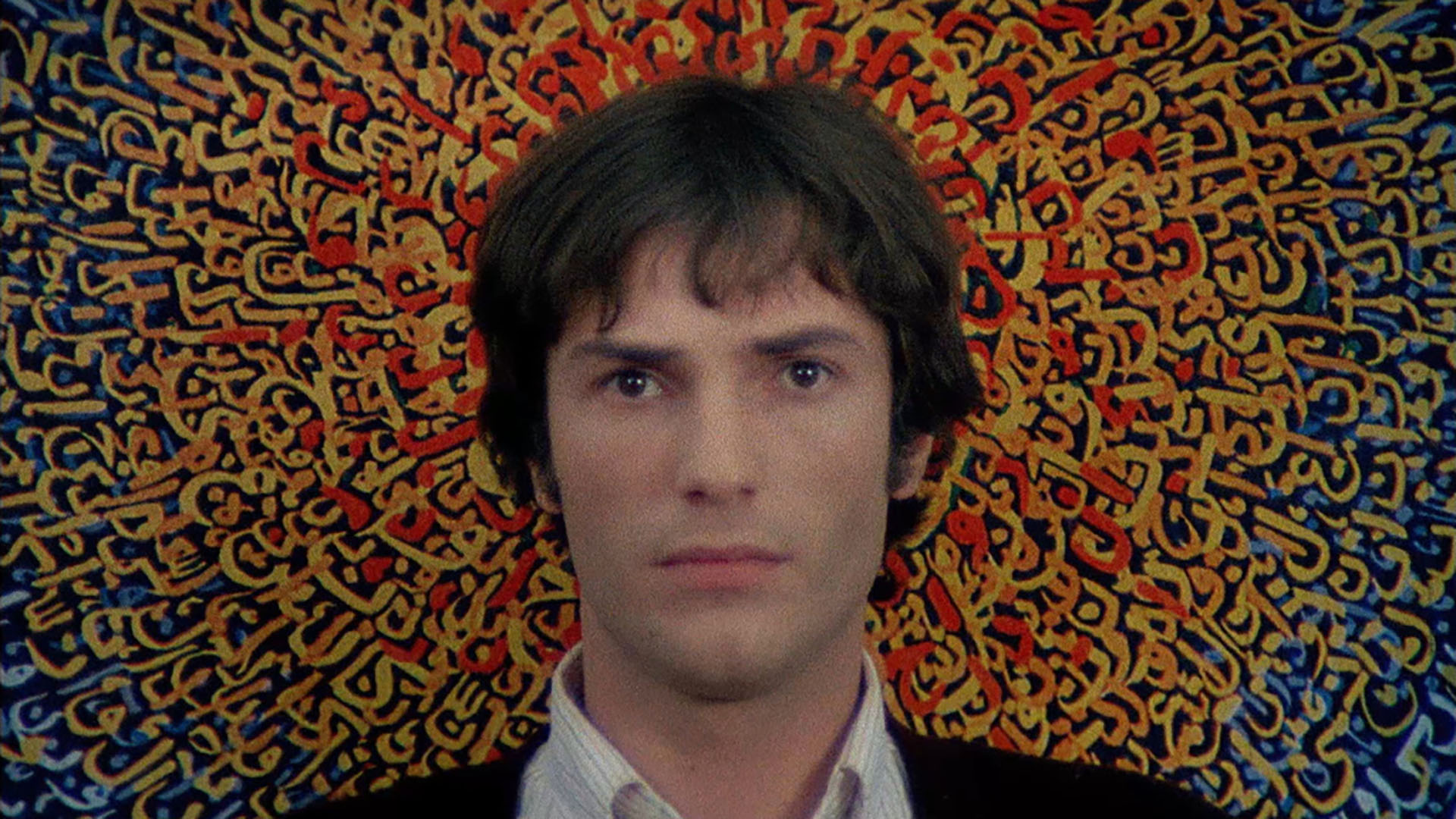
Stills from Eden and After.
This week, we welcome one of Robbe-Grillet’s most erotic works to Kino Film Collection: Successive Slidings of Pleasure (1974), about a young woman who is imprisoned in a convent after being suspected of stabbing her roommate. Exploring themes of sadomasochism and flirting with the nunsploitation genre (not to mention featuring an appearance by one Isabelle Huppert), Successive Slidings of Pleasure plops Robbe-Grillet next to a new set of contemporaries—kinkier ones: Jean Rollin, Jess Franco, and Joe D’Amato. But there is something more restrained and chic about his work than the traditional Fantastique.
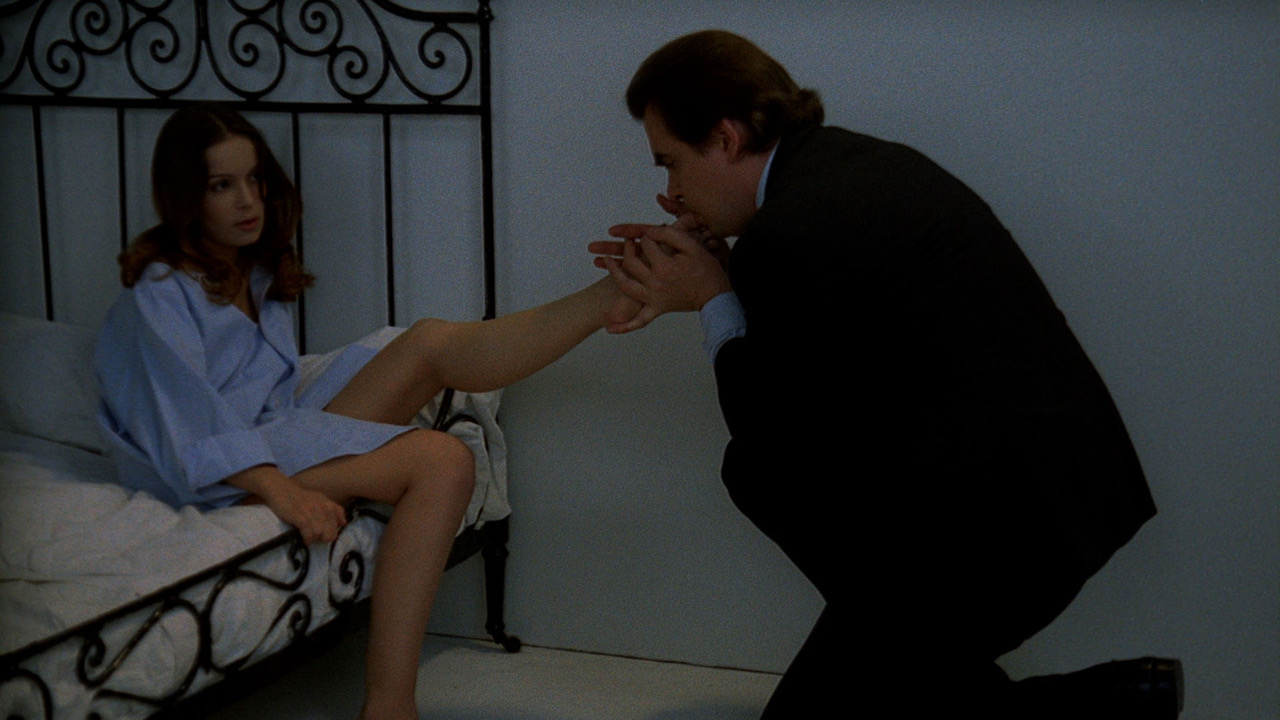
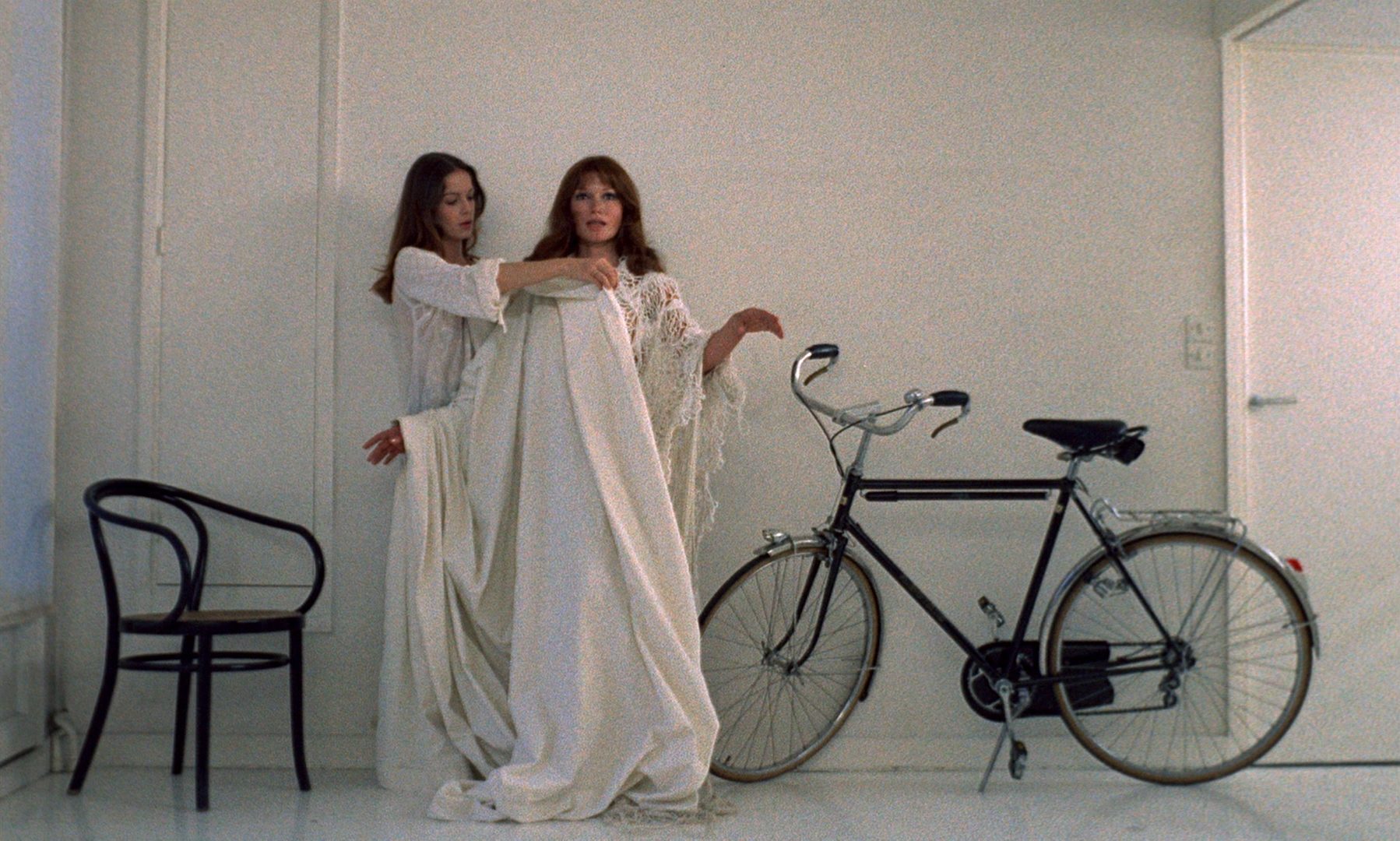
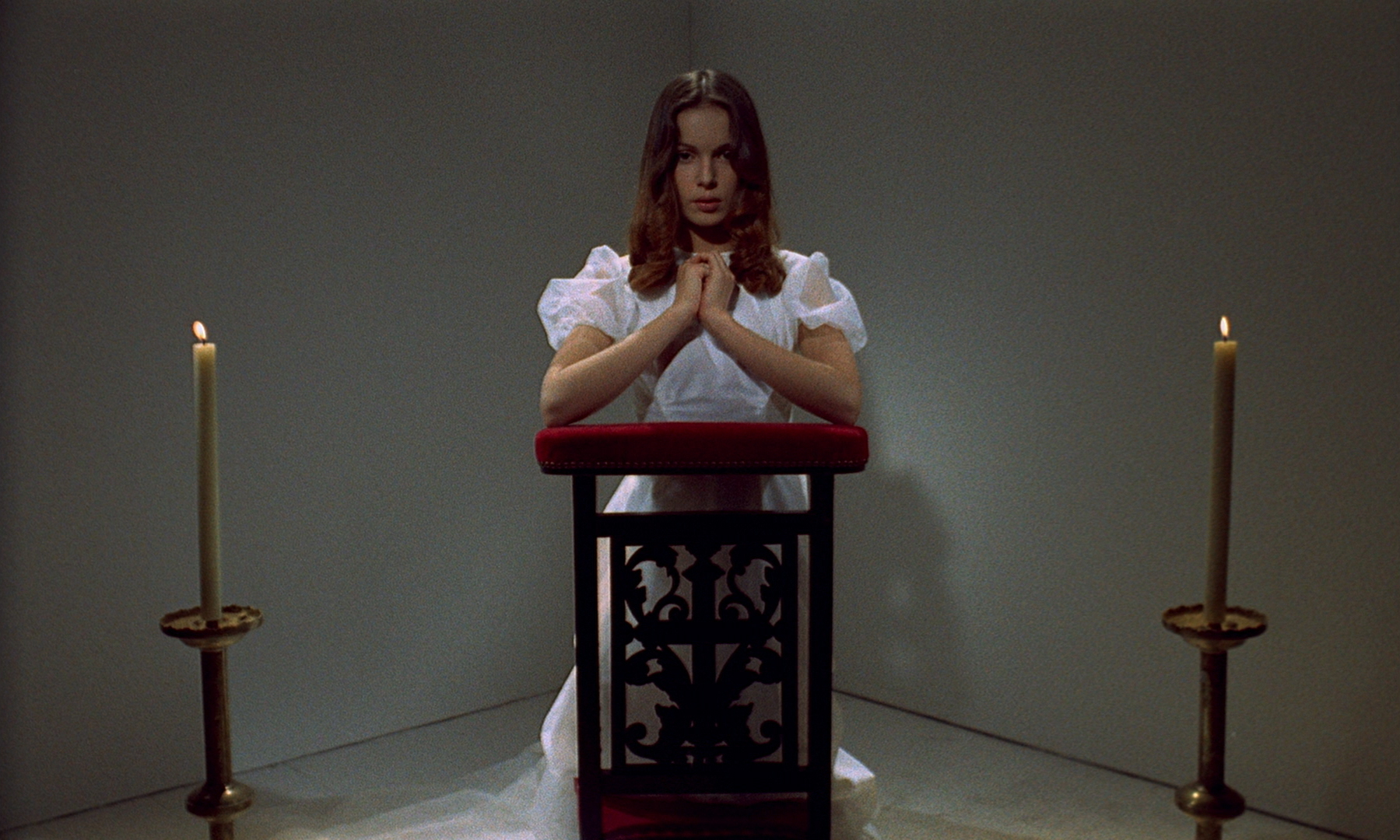
Stills from Successive Slidings of Pleasure.
Also in our collection are Trans-Europ-Express (1967), a black-and-white neo-noir set on a train, and Eden and After (1970), a surreal fever dream about a group of students drawn to a powerful hallucinogen. Both films exemplify Robbe-Grillet’s brand of mystery and eroticism, and once again his incomparable eye for design. The Mondrian-inspired sets in Eden and After remind us of where Robbe-Grillet started—as a champion of nouveau roman who embraced objects in their raw, geometric glory.
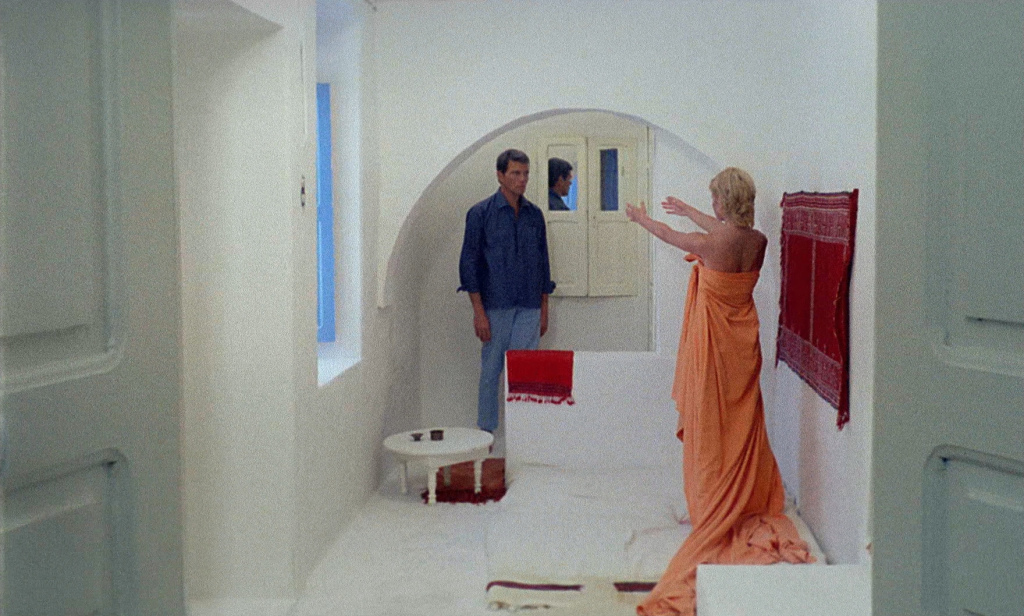
Still from Eden and After.
Back to my original declaration: We need to talk about Alain Robbe-Grillet—maybe only for the simple reason that he’s not talked about enough, considering what he's done for film. Not only has he redefined cinematic storytelling, but this man essentially invented vibes. And there is absolutely no reason he shouldn’t be hung in college dorm rooms alongside Godard and Truffaut.
Stream Alain Robbe-Grillet now on Kino Film Collection.
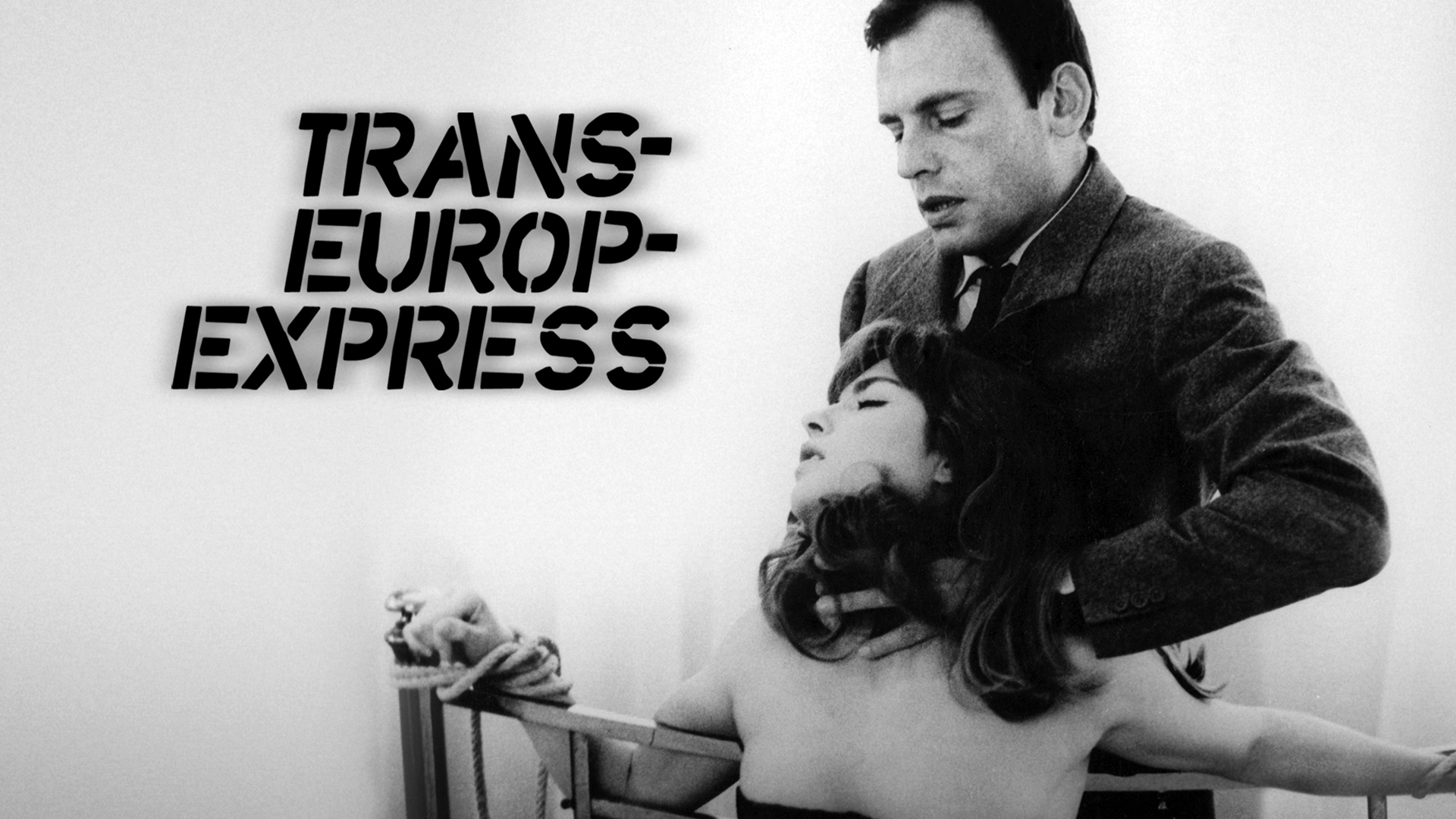
Trans-Europ-Express (1967)
Alain Robbe-Grillet’s self-referential erotic neo-noir thriller is steeped in sadomasochism. On a train from Paris to Antwerp, a director (Robbe-Grillet) and his team invent a crime film starring Jean-Louis Trintignant as Elias, a cocaine smuggler seduced by Eva, who may be working for a rival gang. As the story evolves, Elias becomes lost in a labyrinth of false leads and shifting allegiances.

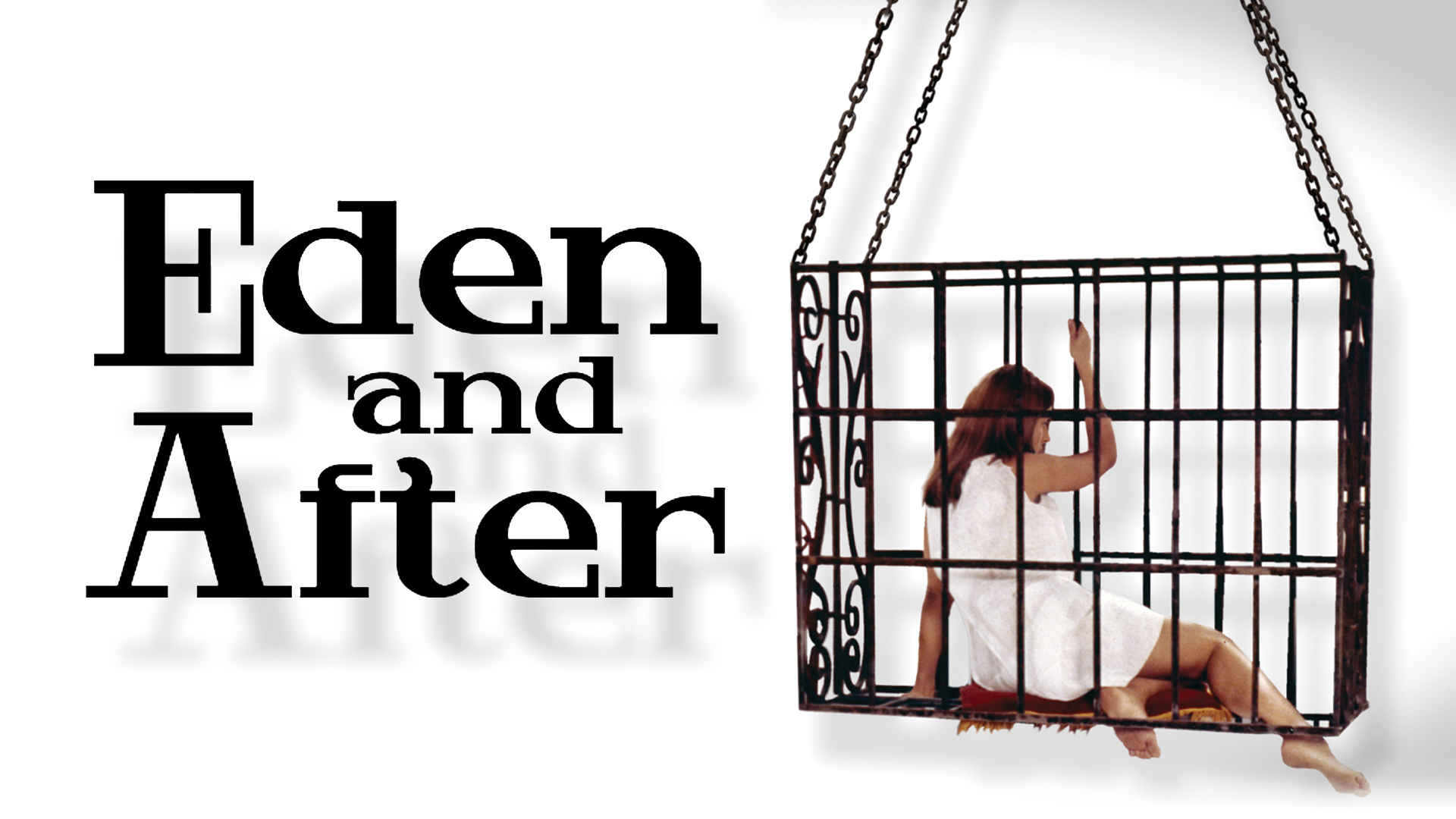
Eden and After (1970)
From the darkly erotic imagination of Alain Robbe-Grillet (Trans-Europ-Express) comes Eden and After, a dreamlike fable in which a group of decadent French students are drawn into the psychological and sexual games of a mysterious Dutchman. Once they imbibe his "fear powder," the students experience a series of hallucinatory episodes.

Successive Slidings of Pleasure (1974)
Alain Robbe-Grillet's cult erotic drama follows a young woman suspected of stabbing her roommate. Imprisoned in a convent, her seductive wiles hypnotize cops and clerics, drawing them into a sadomasochistic world where fantasy and reality pleasurably blur. This devilishly entertaining trip into deviance is made more alluring by special appearances from Jean-Louis Trintigant and Isabelle Huppert.