
WATCH: The Surrealism of Nadav Lapid’s ‘Yes’ Is Grounded in What’s Real
Scroll down to watch our full interview with Nadav Lapid.
Nadav Lapid has been called “Israel’s greatest dissident artist,” and it’s easy to see why. His 2021 film Ahed’s Knee examines artistic censorship at the state level. His 2019 film Synonyms follows a young Israeli man who denounces his homeland and tries to erase his national identity. But Lapid’s criticism comes into unmistakable and furious hyperfocus with his latest film, Yes. Joining Kino Film Collection this week, the satire follows a jazz musician and his wife who submit to everything in their path in a post-October 7th Tel Aviv. Kino Lorber sat down with Lapid to discuss his latest act of dissent.
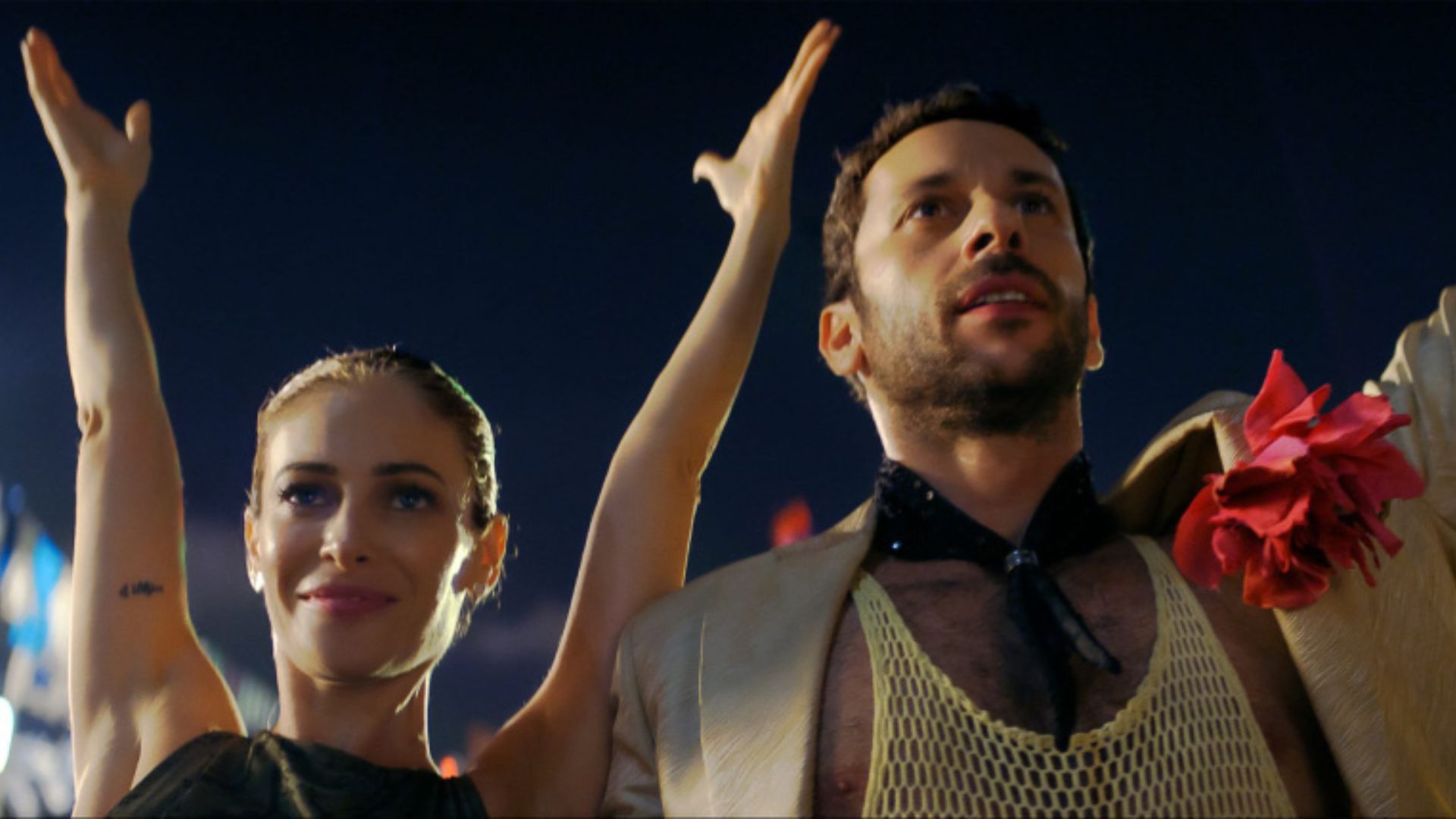
Musician Y (Ariel Bronz) and his dancer wife Yasmin (Efrat Dor) say yes to every request, from entertaining the wealthy at lavish parties to going to bed with them. They submit their time, energy, creativity, and even their bodies to the militaristic ruling class, so why wouldn't they surrender their souls? When a Russian oligarch commissions Y to compose a new national anthem for Israel, the request becomes the crux of the film. Faced with the horrific theme of the song, Y ultimately submits, but for the first time, he feels the moral weight of saying yes.

On the surface, Yes is a maximalist fever dream, with a high-energy, cacophonous first act that features dance battles to La Bouche’s “Be My Lover,” domestic entanglements set to heavy metal, and the strangest threesome you’ll ever see. But for Lapid, the film itself is not surreal or absurd; it’s merely a mirror reflecting the surrealism and absurdity of the real world. “I just pointed my camera to the madness,” Lapid told Kino Lorber. “I responded to the madness of life with [the] madness of cinema.”
The over-the-top first act is sharply contrasted by the film’s sobering later scenes, some of which were shot guerilla style along the Gaza border where smoke plumes from the ongoing genocide can be seen and real-life explosions can be heard. Lapid reminds us that this is the backdrop behind the decadence and excess displayed in the first half. The revelry of the military elite rages unbridled not in spite of this violence, but because of it. And if the tonal contrast seems disturbingly jarring, that’s the point. That’s reality.
“The genesis of the film, the first image I had in my mind was the painting [Pillars of Society] by George Grosz,” Lapid recounts. Painted in 1926 during the Weimar Republic, the work is a biting satire on the German elite, who are portrayed in the composition as corrupt and complicit in the rise of fascism. By including the painting in the film’s opening scene, Lapid draws clear parallels to modern-day Israel. “The painting is very grotesque and a caricature, but in the end it was very truthful,” Lapid says. “Because [Grosz] was one of the only ones who saw what hell would look like.” After the events of October 7th and the war that followed, Lapid noted that he made one key change to his script: instead of capturing the feeling of being on the precipice of a moral abyss, he wrote a film that plunges us into it.
Yes is packed with unforgettable images, but one scene near the end will stay with you long after the credits roll. It’s so overtly literal that it’s almost poetic—in an ultimate act of submission, Y drops to his knees and begins licking the boots of the Russian billionaire, not-so-subtly suggesting the price of survival in a society ruled by wealth, power, and military force. But this is Lapid’s genius—he subjects his characters to humiliation to expose the systems that demand obedience. And he’s turned repeated moments of surrender into a fearless film of resistance. “It's a punk film about submission,” Lapid says. “Everyone is shouting together, ‘Yes!’ but the camera shouts, ‘No!’
Stream Yes now on Kino Film Collection, along with Ahed’s Knee and Synonyms, and watch our entire interview with Lapid below.
Yes (2026)
Dissident filmmaker Nadav Lapid once again takes critical aim at the Israeli government in this blistering satire about artistic submission. In the days following October 7, a musician resolves to say “yes” to everything. Surrendering himself and his art to Israel’s social, political and military elite, he is tasked with composing a rousing and ruthless new national anthem.